
the Warranty claims for used trucks were handled entirely through phone calls and email chains between customers, service departments, and internal teams.
The process was slow, inconsistent, and easy to get wrong.
I designed a responsive website to simplify the experience—making the process clear, structured, and easier to complete while reducing manual back-and-forth.
The goal was to create a system that helps users understand what to do, submit the right information the first time, and keep everything moving.
I designed the experience end-to-end.
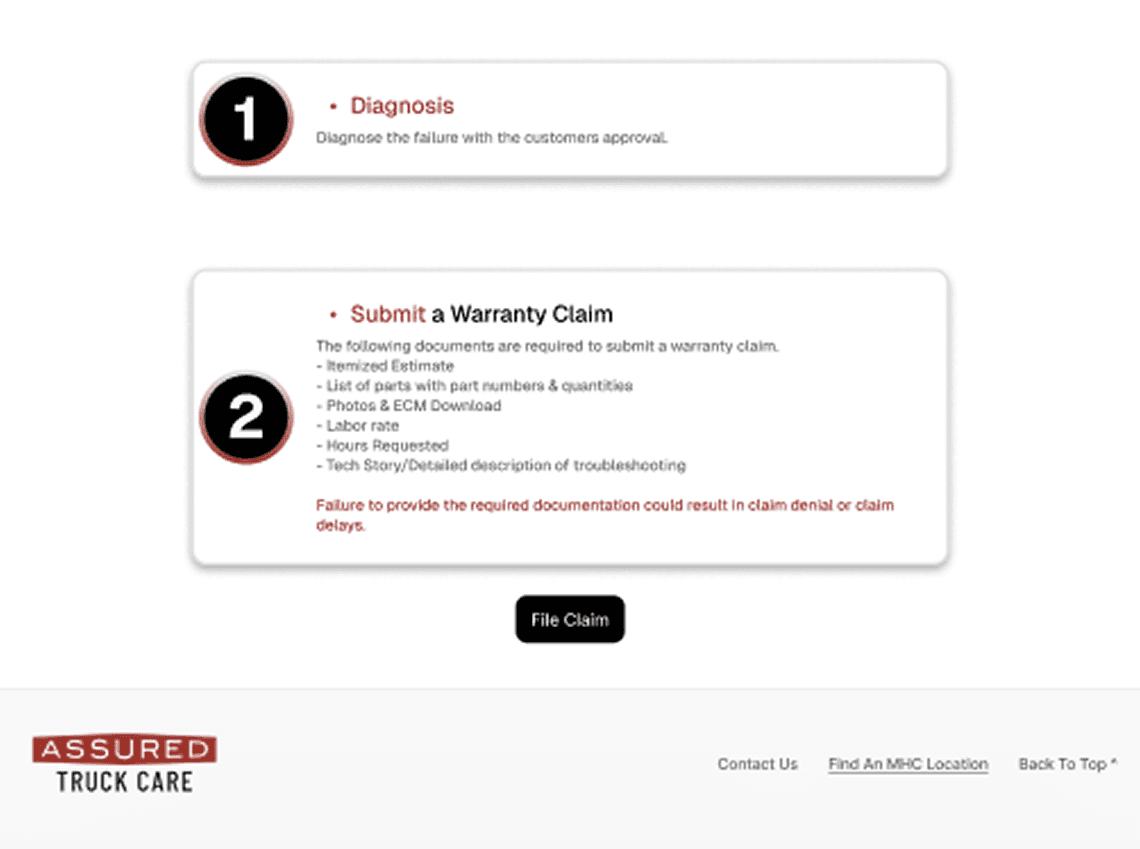
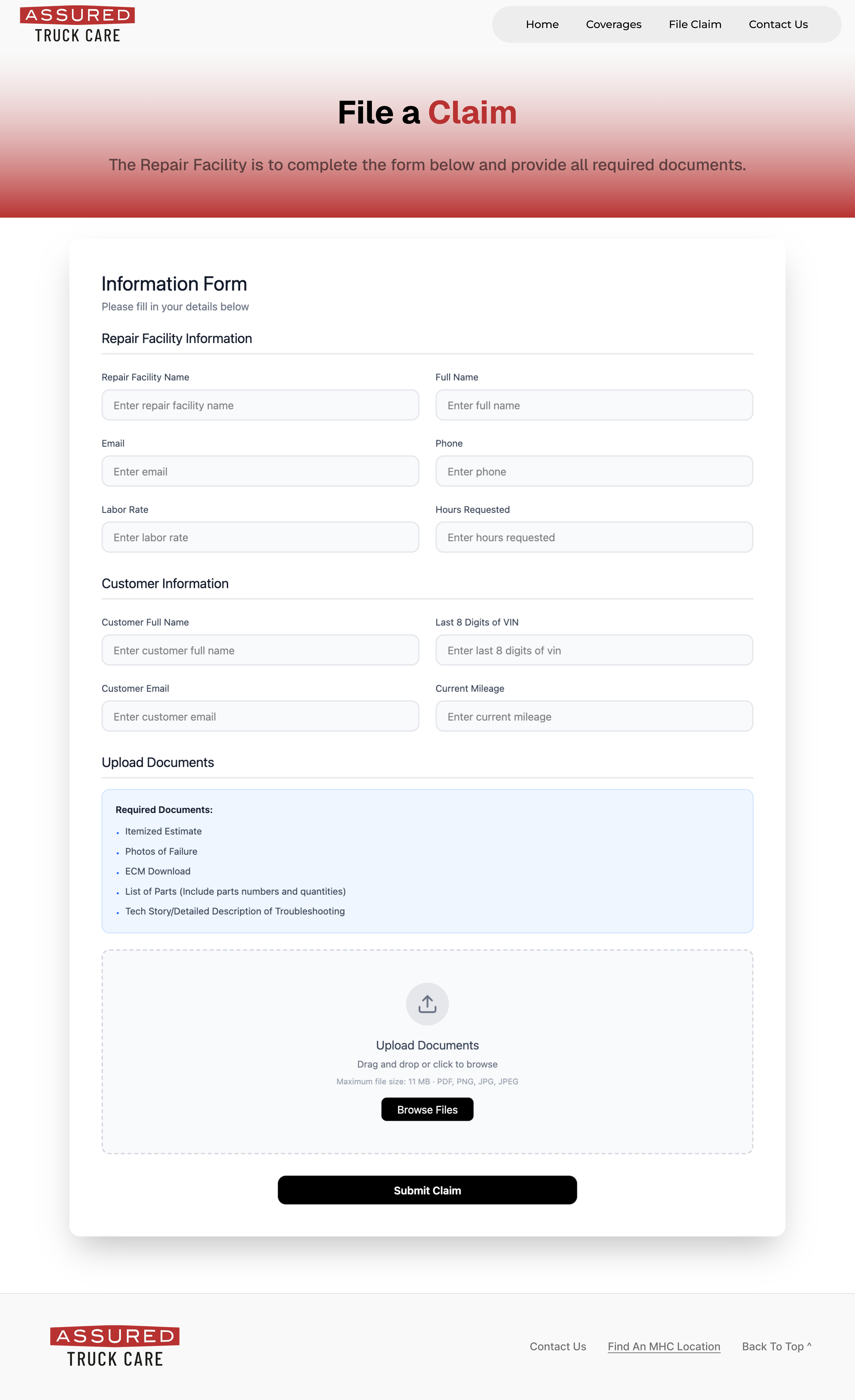
That included structuring the website, mapping the claim workflow, and designing all core pages—homepage, coverage breakdown, claim process, claim form, and contact.
The focus was on turning a manual process into something structured and repeatable.
Truck Owners / Customers
Need to understand what’s covered and how to start a claim without confusion
Service Technicians / Repair Facilities
Need to submit accurate information quickly to avoid delays
Warranty Team
Needs complete, consistent data to process claims efficiently
The warranty process lacked structure and clarity.
Customers didn’t know how to start a claim, service departments submitted incomplete information, and internal teams had to manually fill in the gaps.
Most of the work wasn’t processing claims—it was chasing missing details and correcting mistakes.
The issue wasn’t access to information—it was how that information was communicated.
Users weren’t failing because they didn’t care—they were failing because the process wasn’t clear.
If the system doesn’t guide people, they default to guessing or reaching out for help.
That’s where the delays were coming from.
I wanted to design a system that:
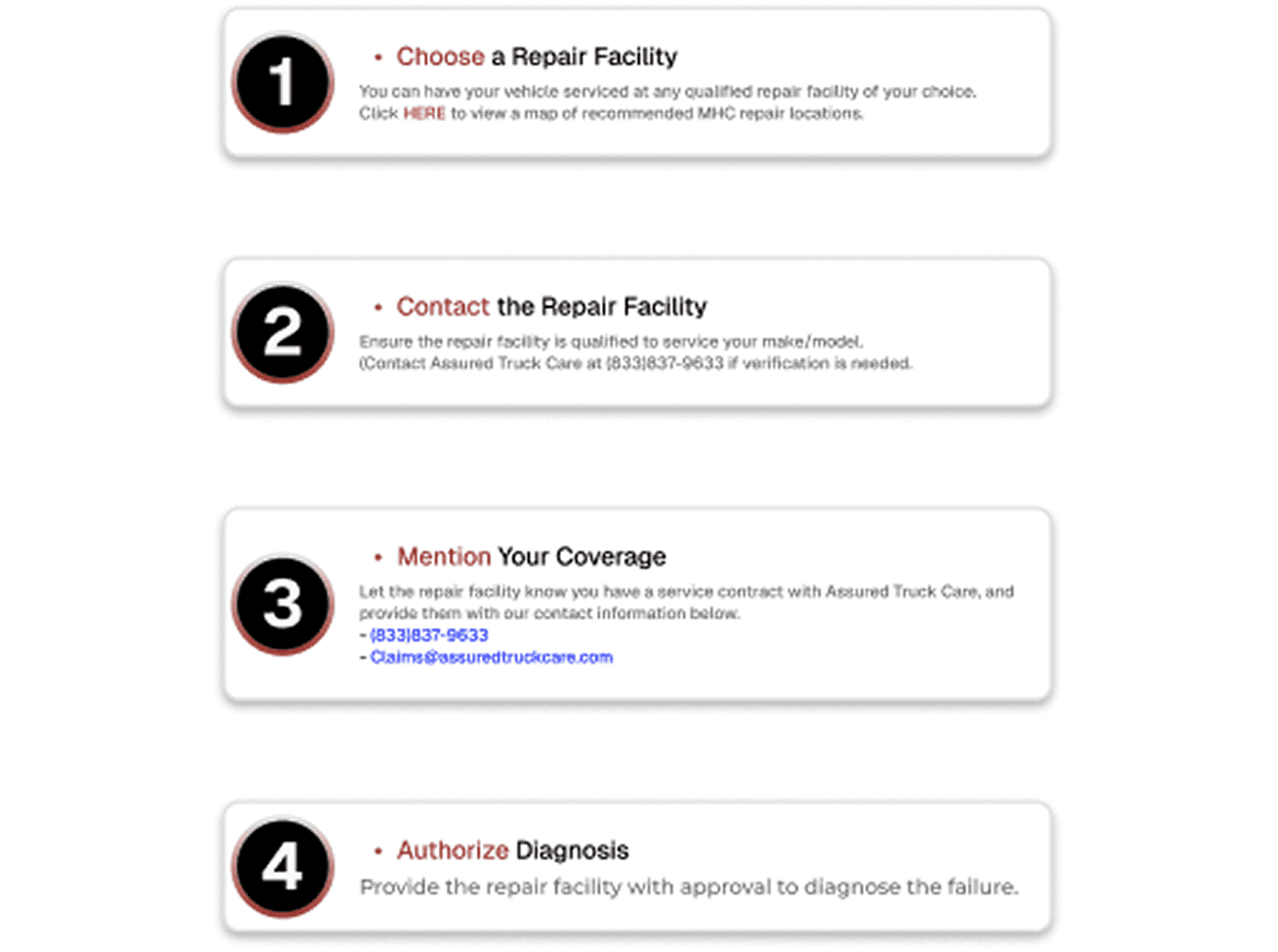
> clearly explains how the claim process works
> guides users step-by-step instead of relying on memory
> standardizes how information is submitted
> reduces back-and-forth communication
> makes the next action obvious at every stage
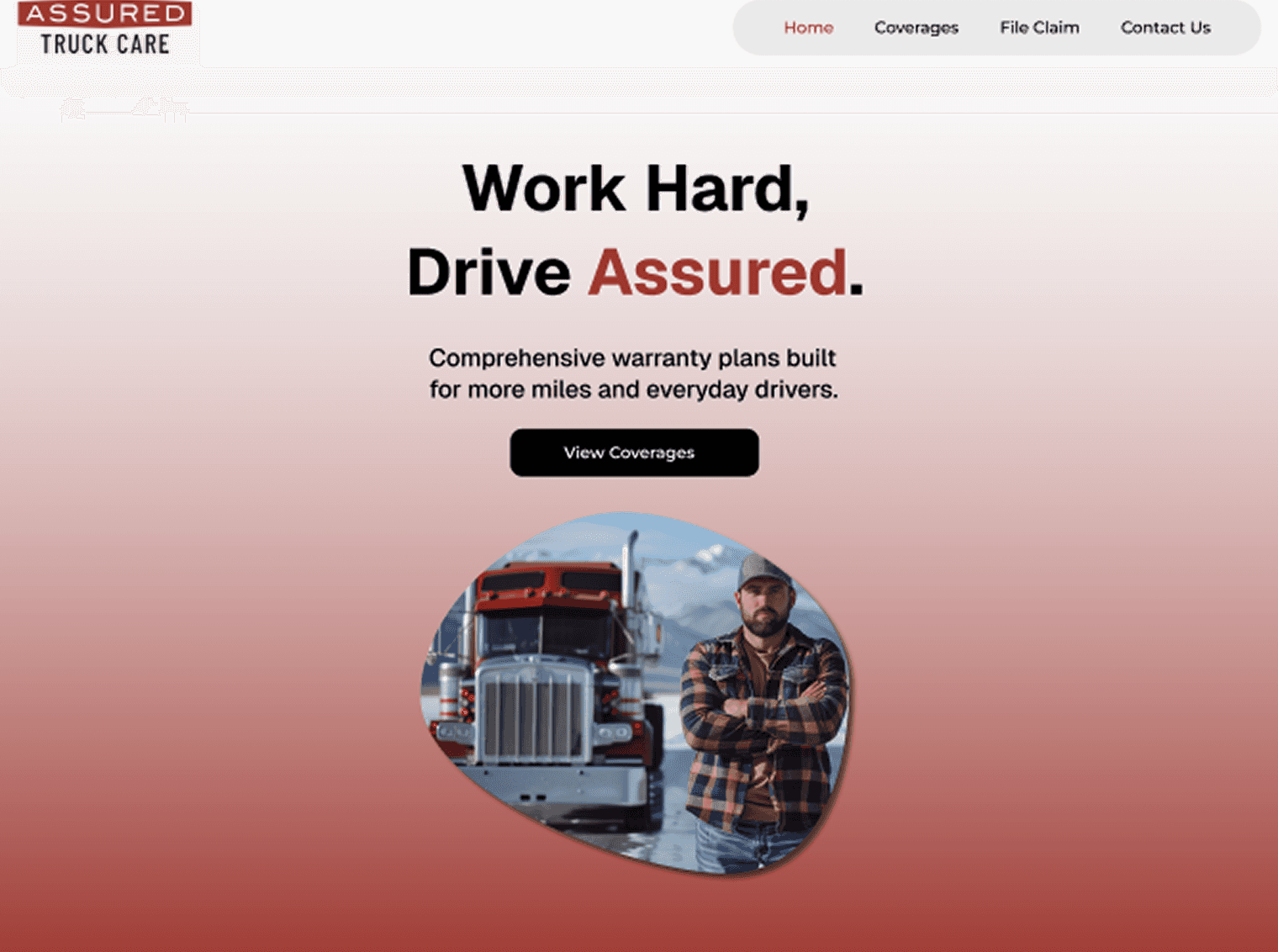
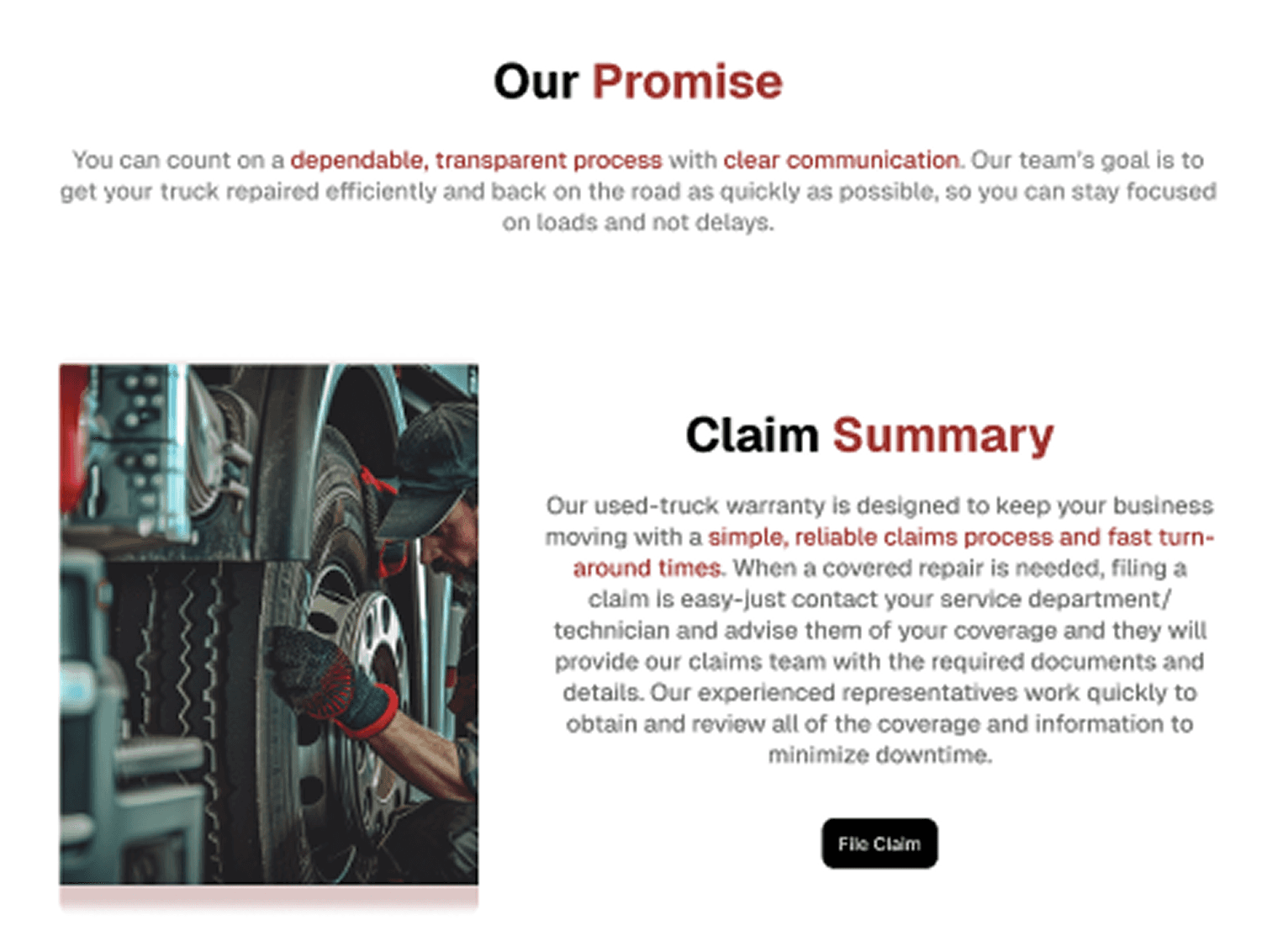
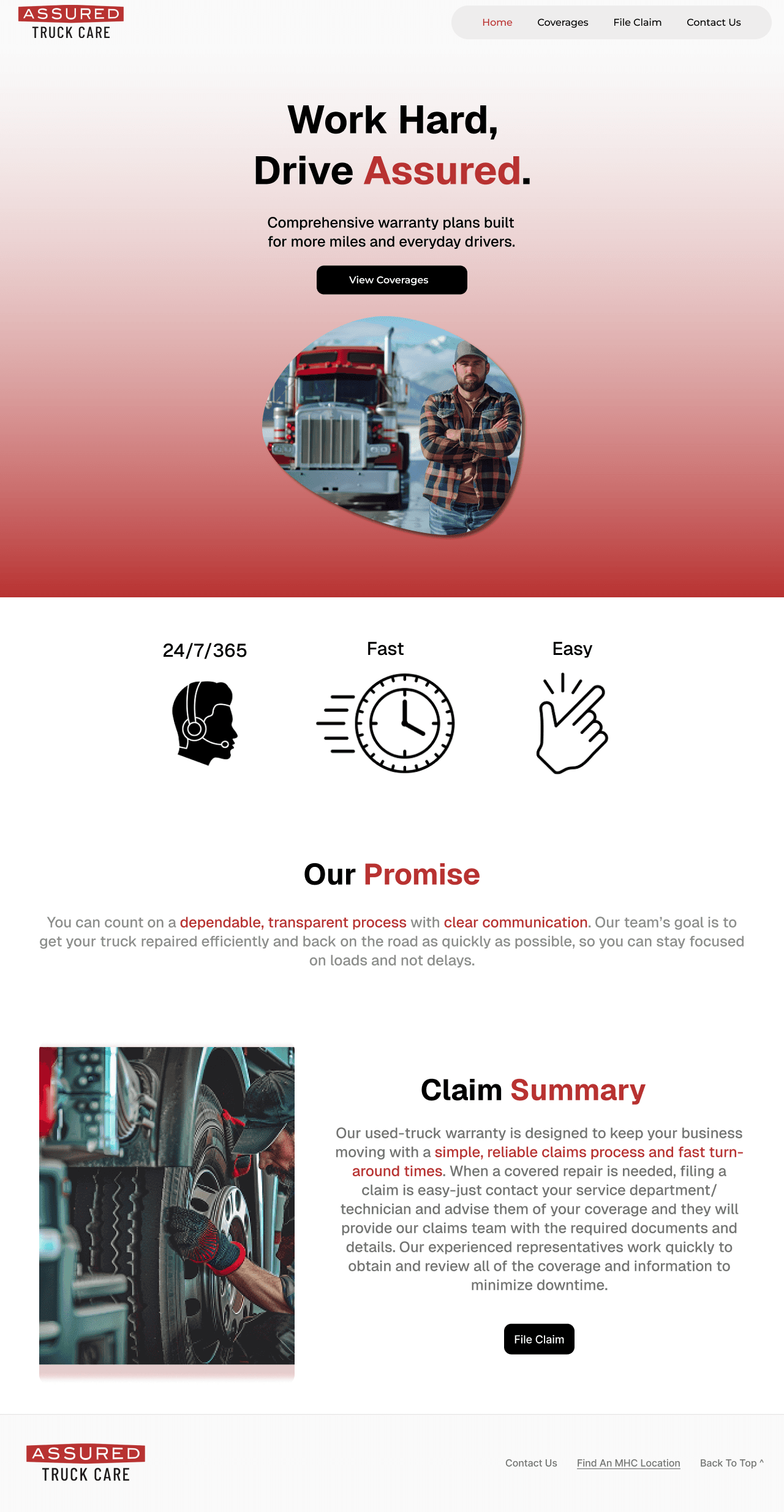
The homepage is designed for immediate clarity.
It answers three questions right away:
what this is
who it’s for
what to do next
A strong headline, clear CTA, and trust indicators guide users directly into the experience without requiring exploration.
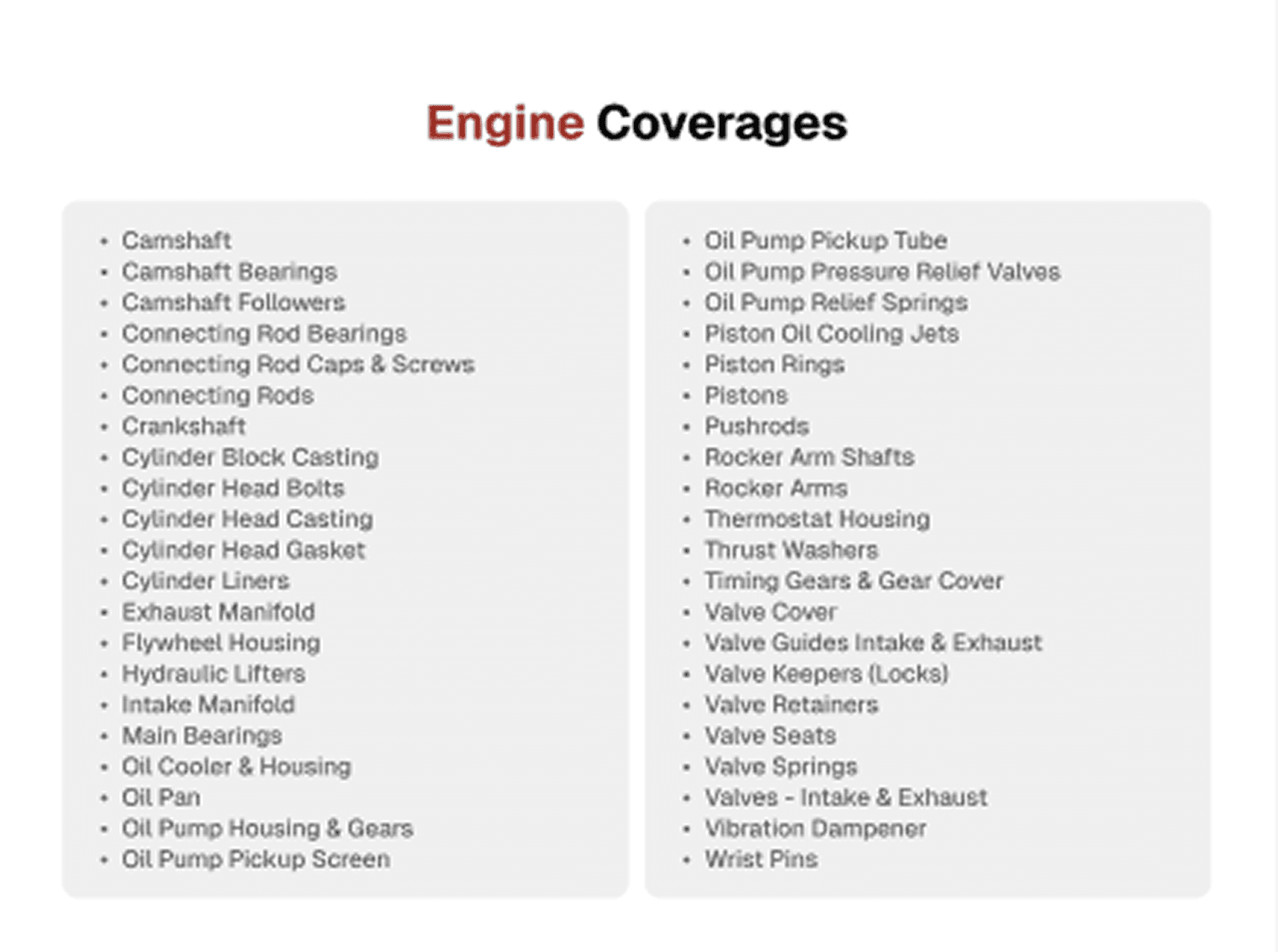
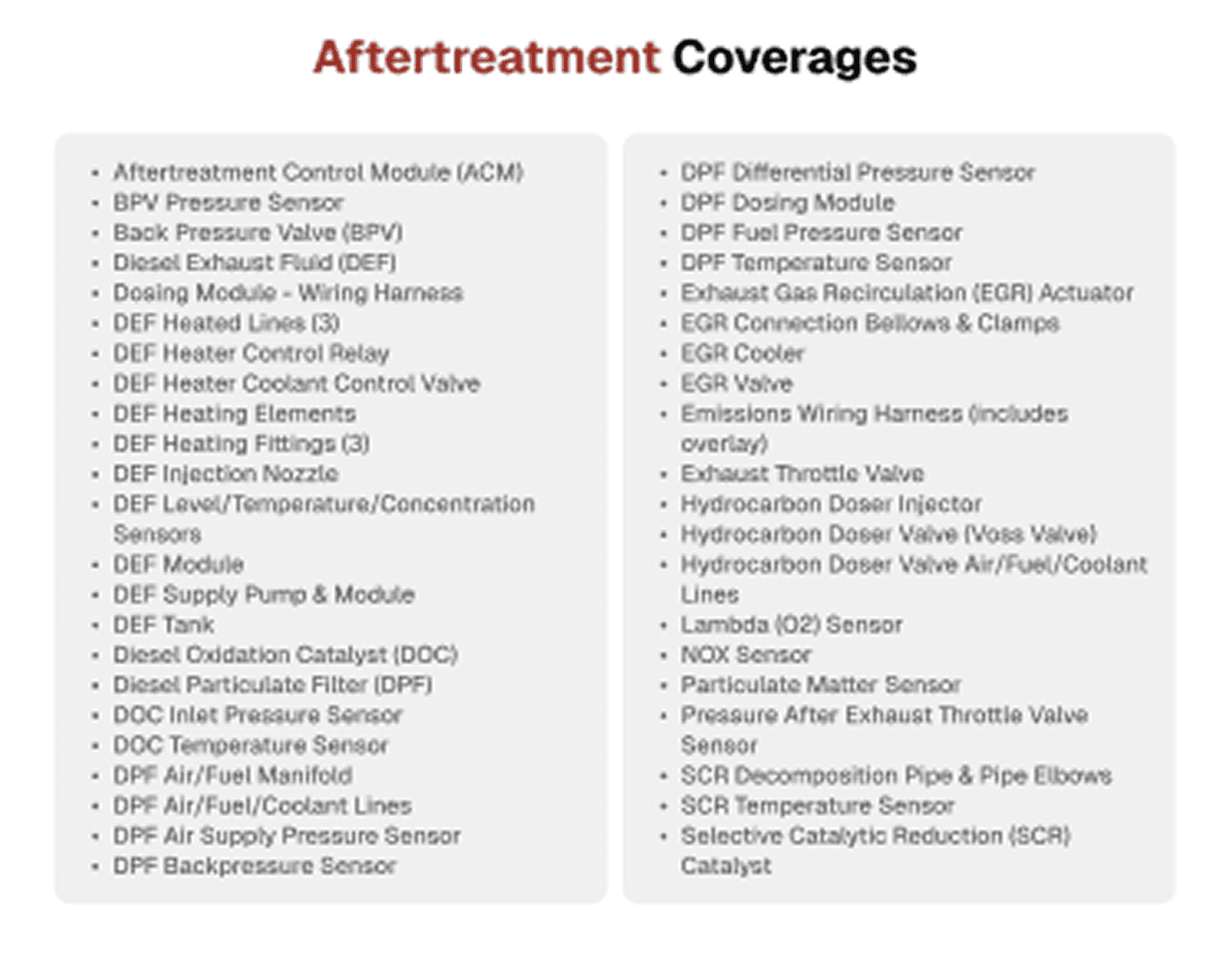
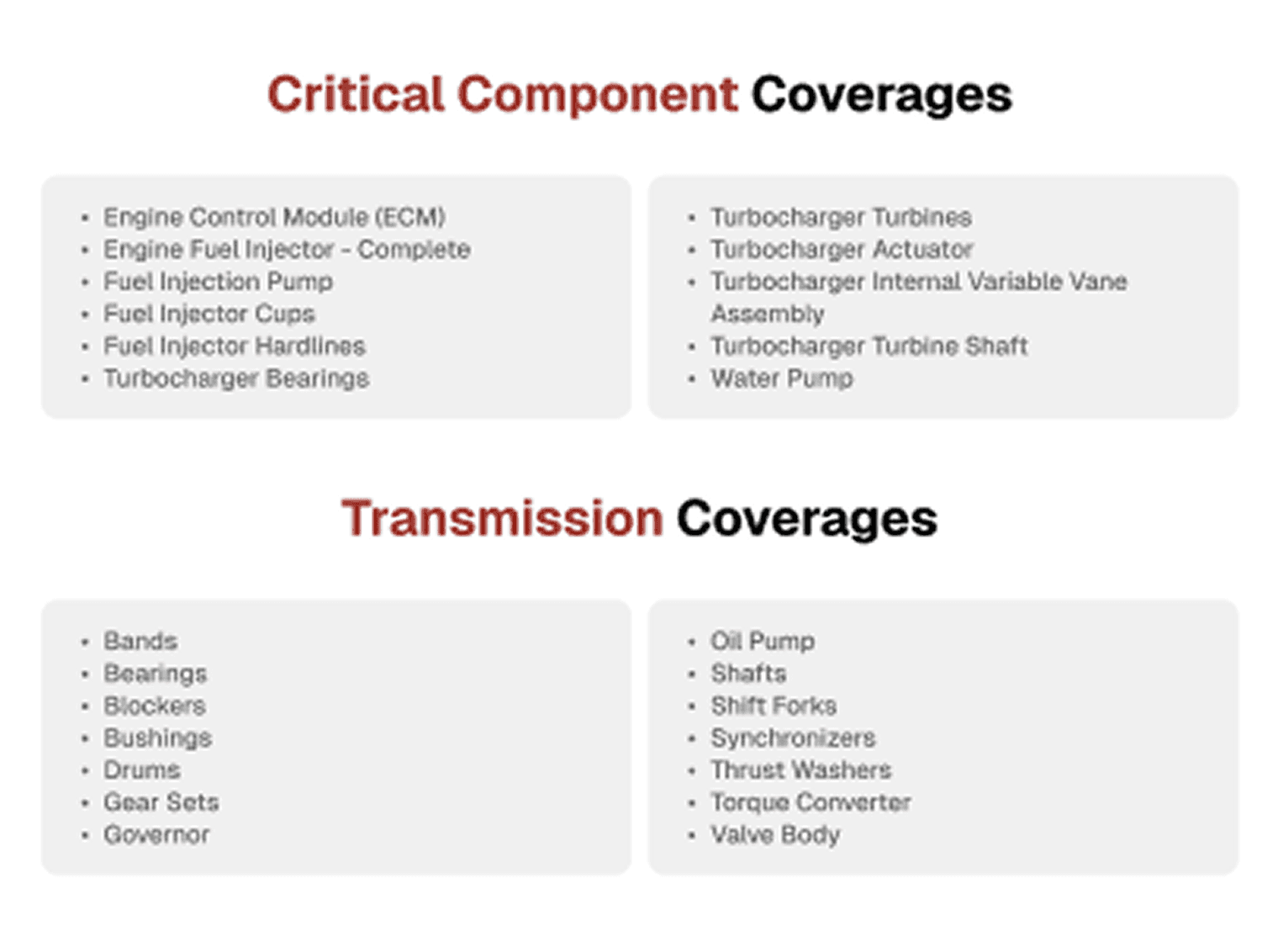
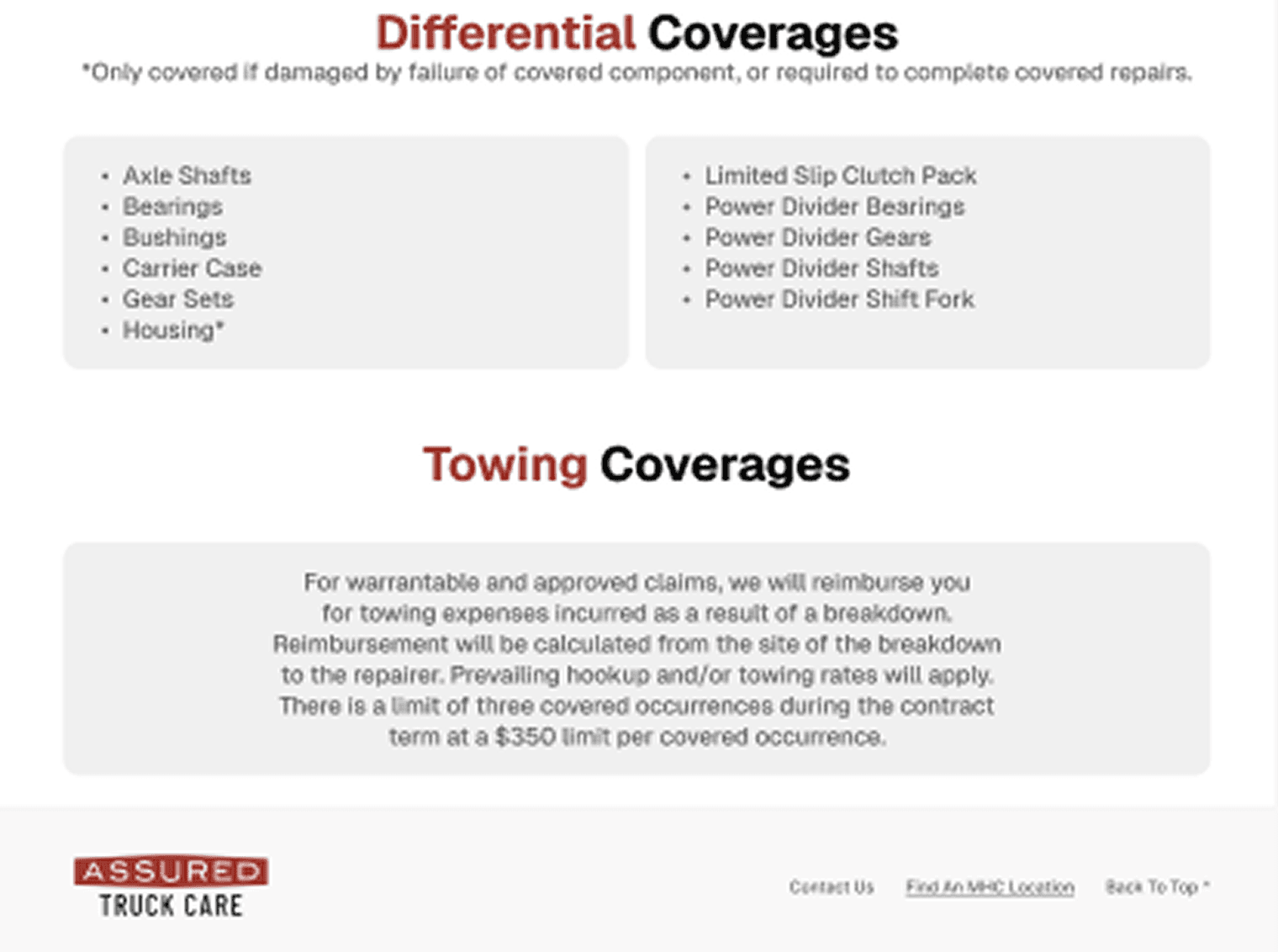
Coverage information is structured to be easy to scan and reference.
Instead of dense documents, it’s organized into clear categories like engine, aftertreatment, and transmission.
Users can quickly confirm what’s included without needing to reach out for clarification.
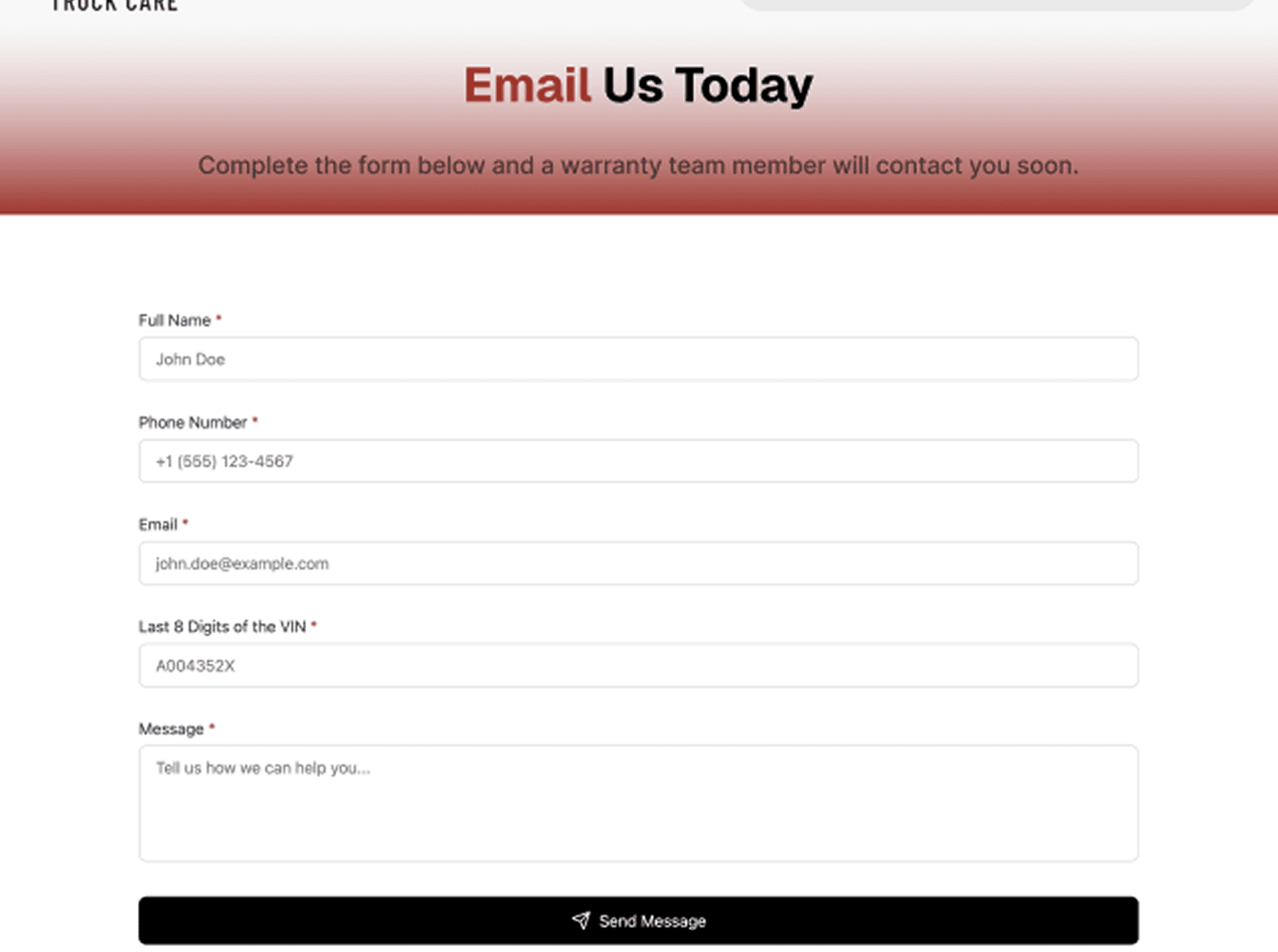
The contact experience is intentionally simple.
Minimal fields, clear purpose, and no unnecessary friction.
It’s there when users need it—but the goal is that most users won’t.
This project reinforced a few key things:
clarity solves more problems than adding features
most inefficiencies come from unclear systems, not user error
good design reduces the need for support
If I continued this, I would add claim tracking, real-time status updates, and validate the flow with actual users to measure completion and drop-off.