Atlas
CRE OS.
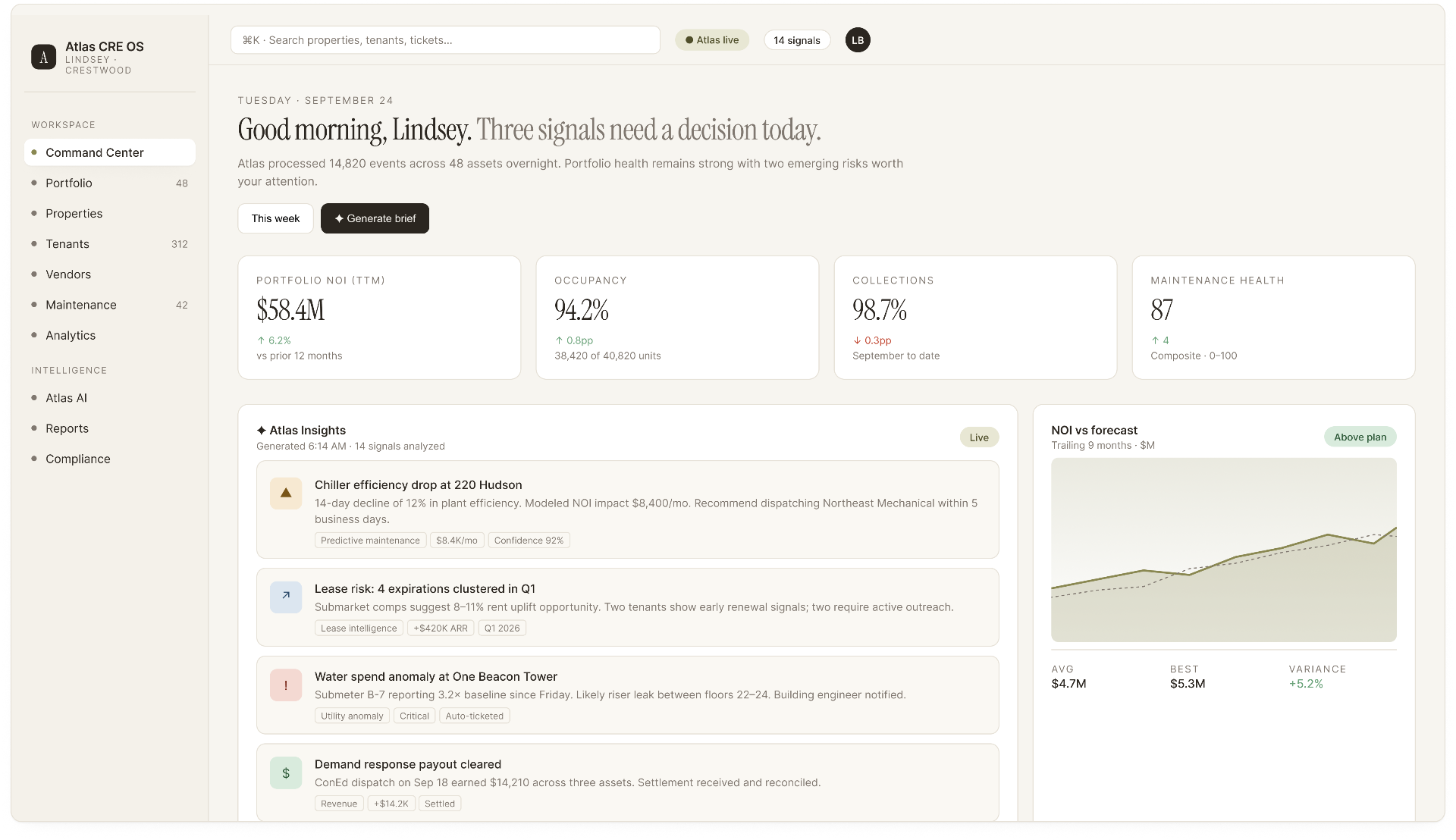
I designed Atlas CRE OS, an AI-powered commercial real estate operating system that turns scattered building data, occupancy, maintenance, leasing, and utilities, into actionable daily insights so portfolio managers can spot risks and opportunities across dozens of properties.
- Role
- Product Designer
- Timeline
- 3 Weeks
- Focus
- Operating System
01, The Problem
Scattered data across multiple platforms and manual administrative tracking.
Management professionals often utilize multiple platforms and software, including manual tracking of contact and building data.
Portfolio Data Silos
Leasing, maintenance, and financial data lived in disconnected platforms with no unified view of building or portfolio performance.
Operational Noise
Property managers struggled to distinguish routine upkeep from urgent NOI-impacting issues across dozens of assets.
Administrative Burden
Vendor contacts, insurance certificates, amenity usage, and utility data were tracked manually across spreadsheets and inboxes.
Portfolio Blind Spots
Leadership lacked real-time visibility into occupancy trends, maintenance backlogs, and financial health across properties.
02, My Approach
I designed a system that lifted the manual burden and guided decisions.
AI integration to surface alerts and encompass property data within one system.
01
Discover
I personally worked in real estate management and had experience with where systems were breaking.
02
Define
I noticed a large amount of administrative and maintenance data tracking that was heavily manual.
03
Structure
There was a need for a strong dashboard, and I used information architecture to guide me when designing the system.
04
Design
Created wireframes, prototypes, and high fidelity designs.
05
Validate
I continued to iterate, refine and repeat until the outcome was functional.
03, The Features
A system designed to encompass entire portfolios.
- Command Center
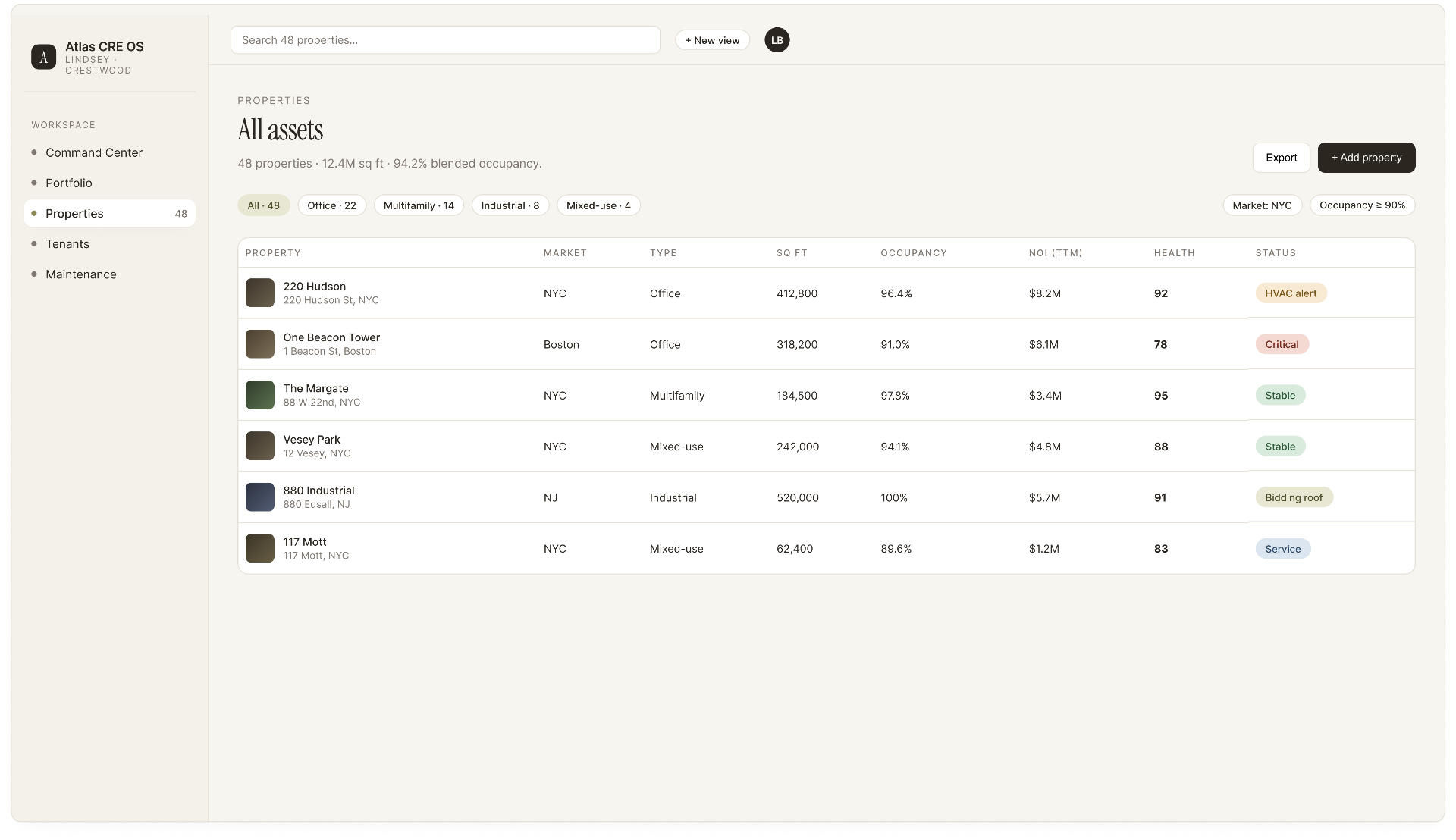
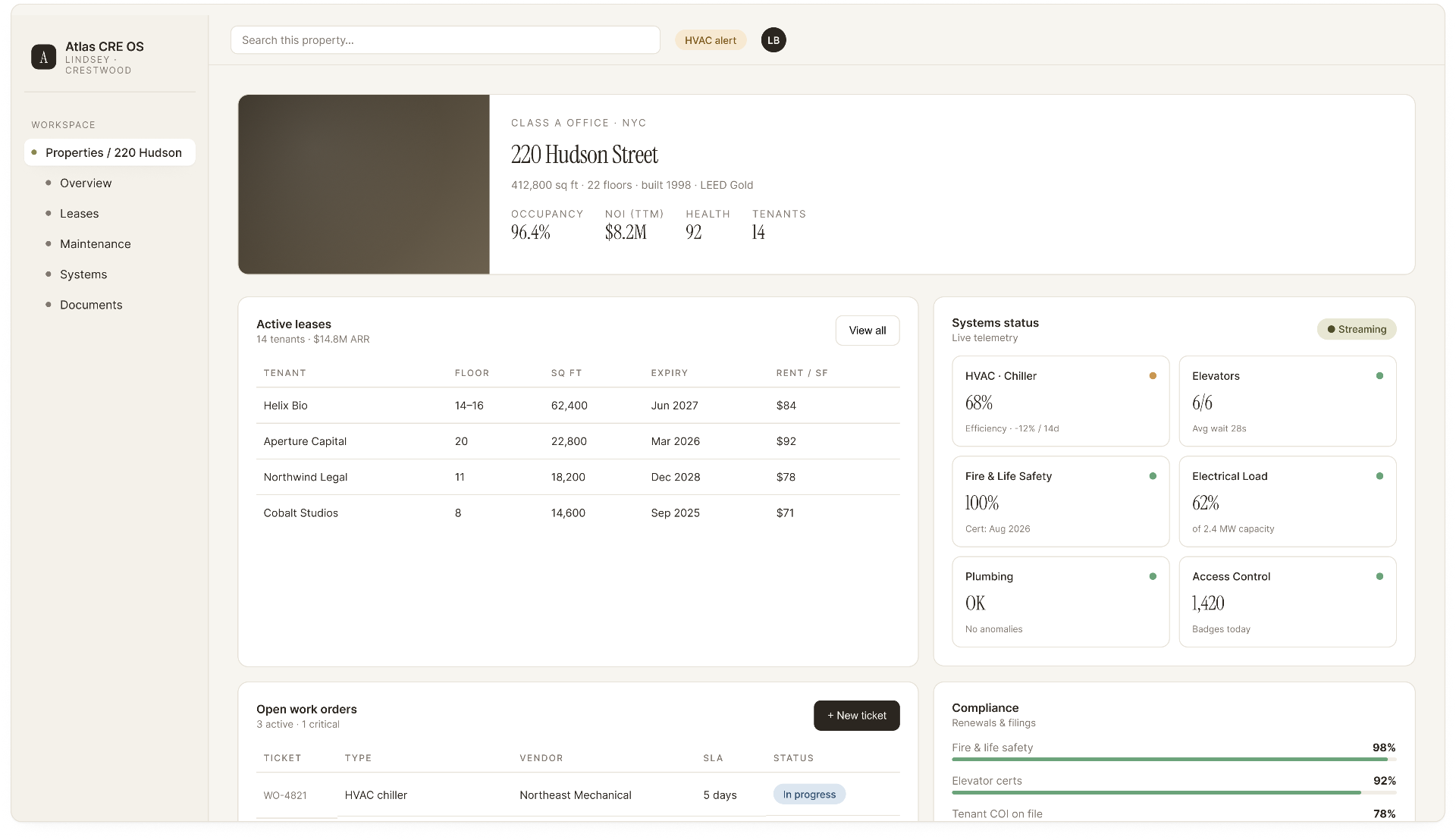
- Property Detail
- Maintenance
- Tenants
- Vendors
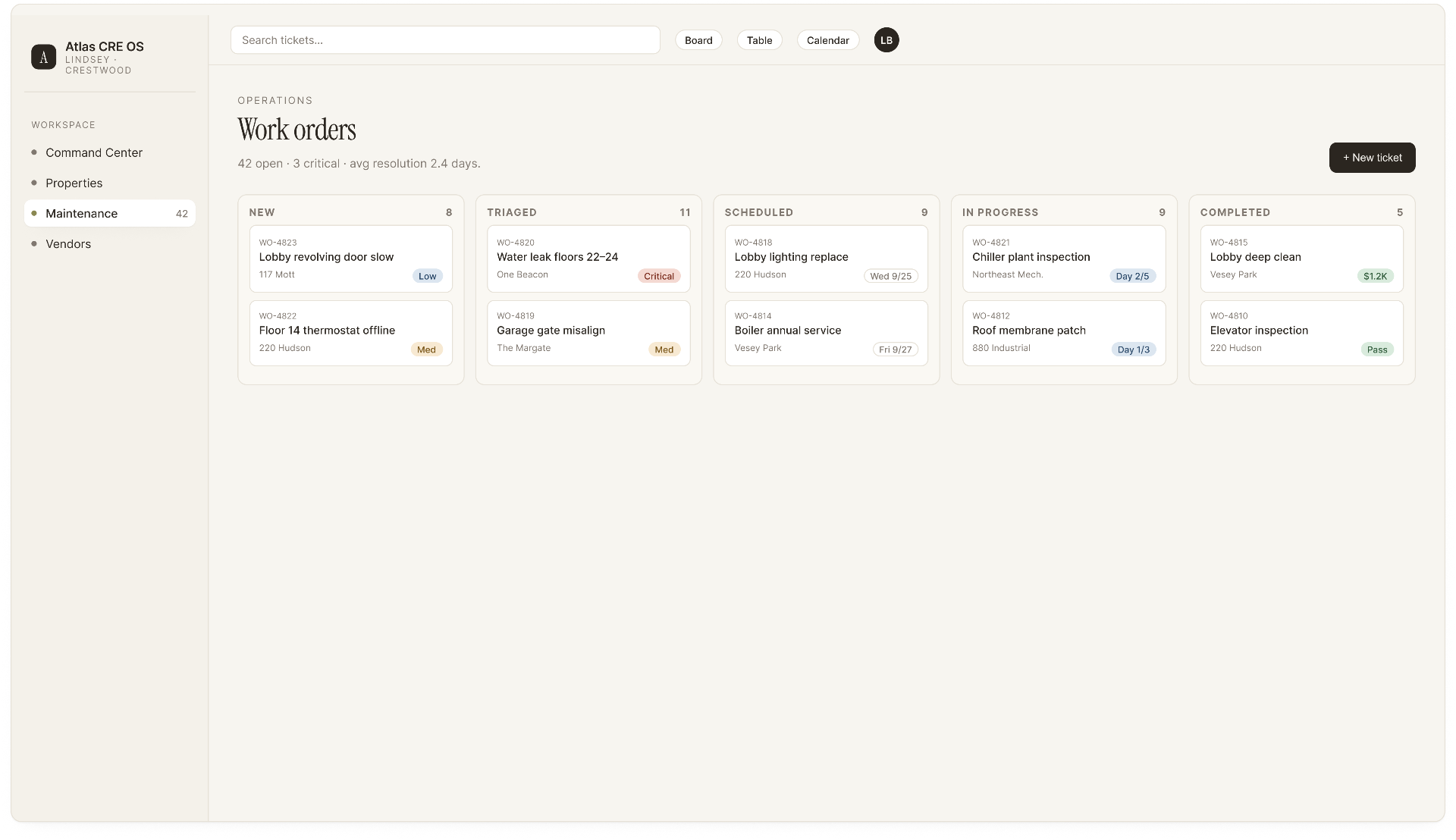
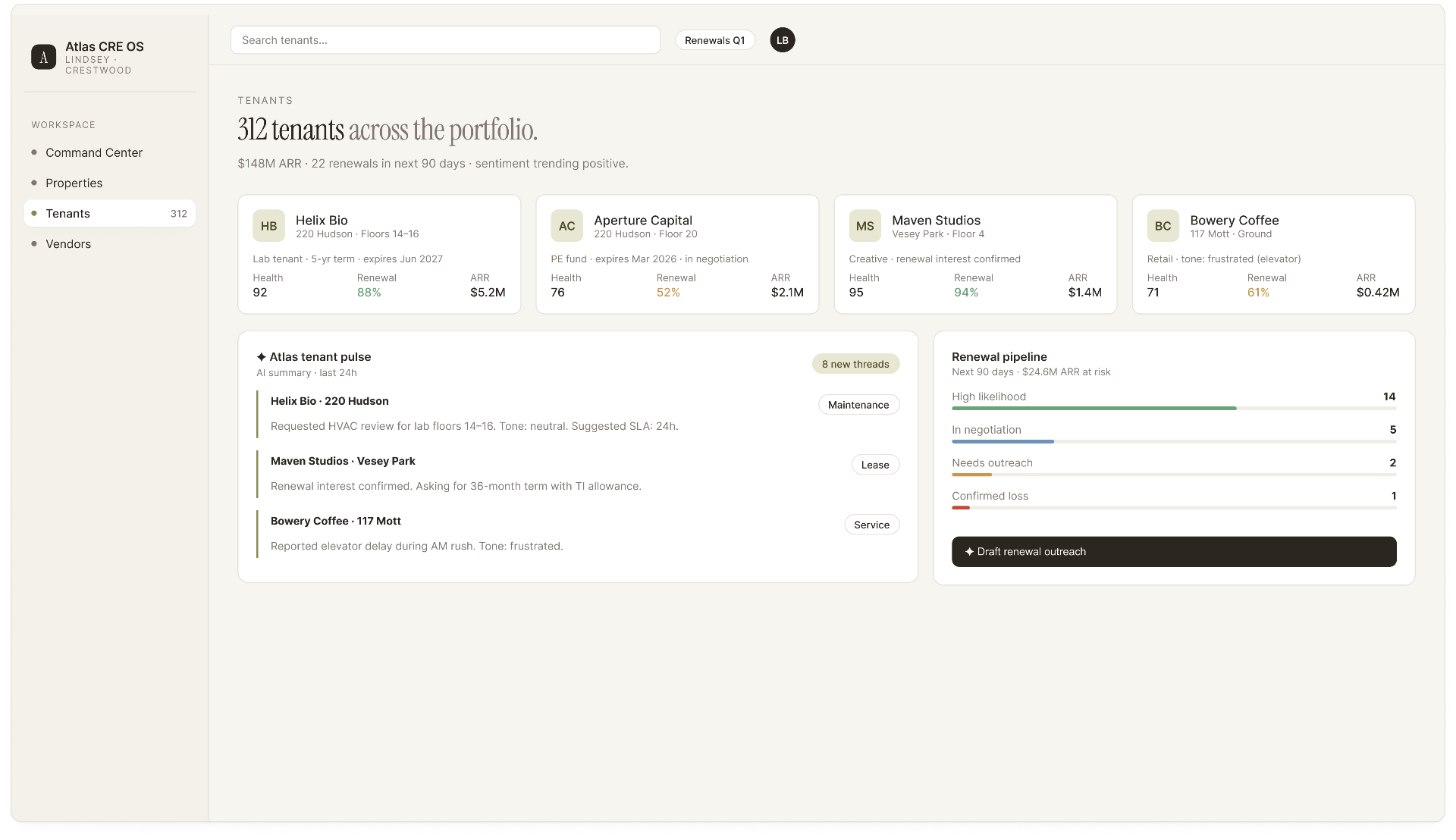
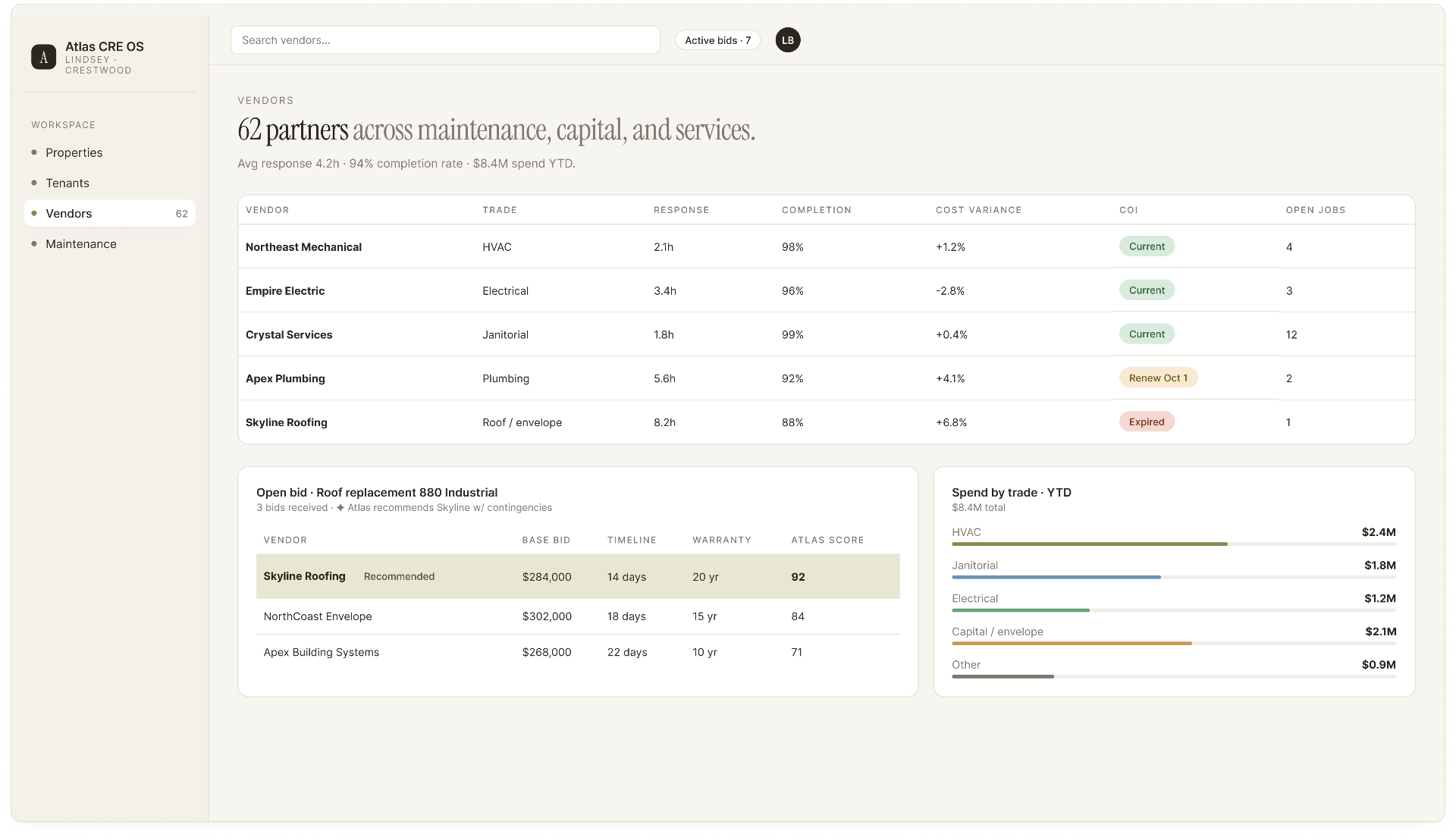
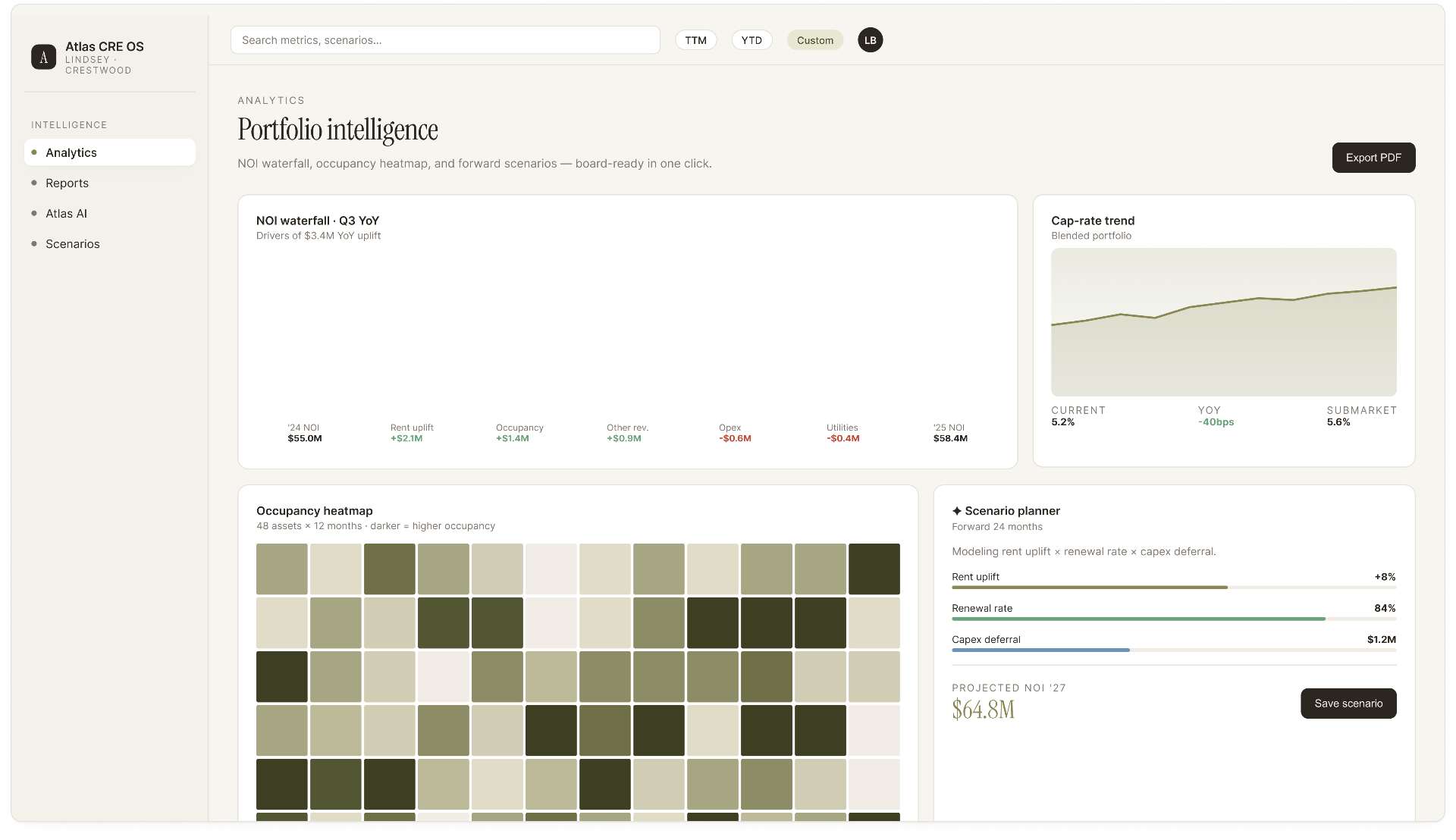
04, Design Decisions
Every decision was intentional and rooted in user needs.
Unified Dashboard
One screen for leases, work orders, systems, and financials. No more spreadsheet hopping.
Clear Hierarchy
Ranked by NOI impact so the chiller drop surfaces above the filter change.
AI Integration
AI turns raw data into specific next steps, not raw numbers to interpret.
Progress Visibility
Live status on every work order, lease, COI and deadline without status meetings.
Modular Design
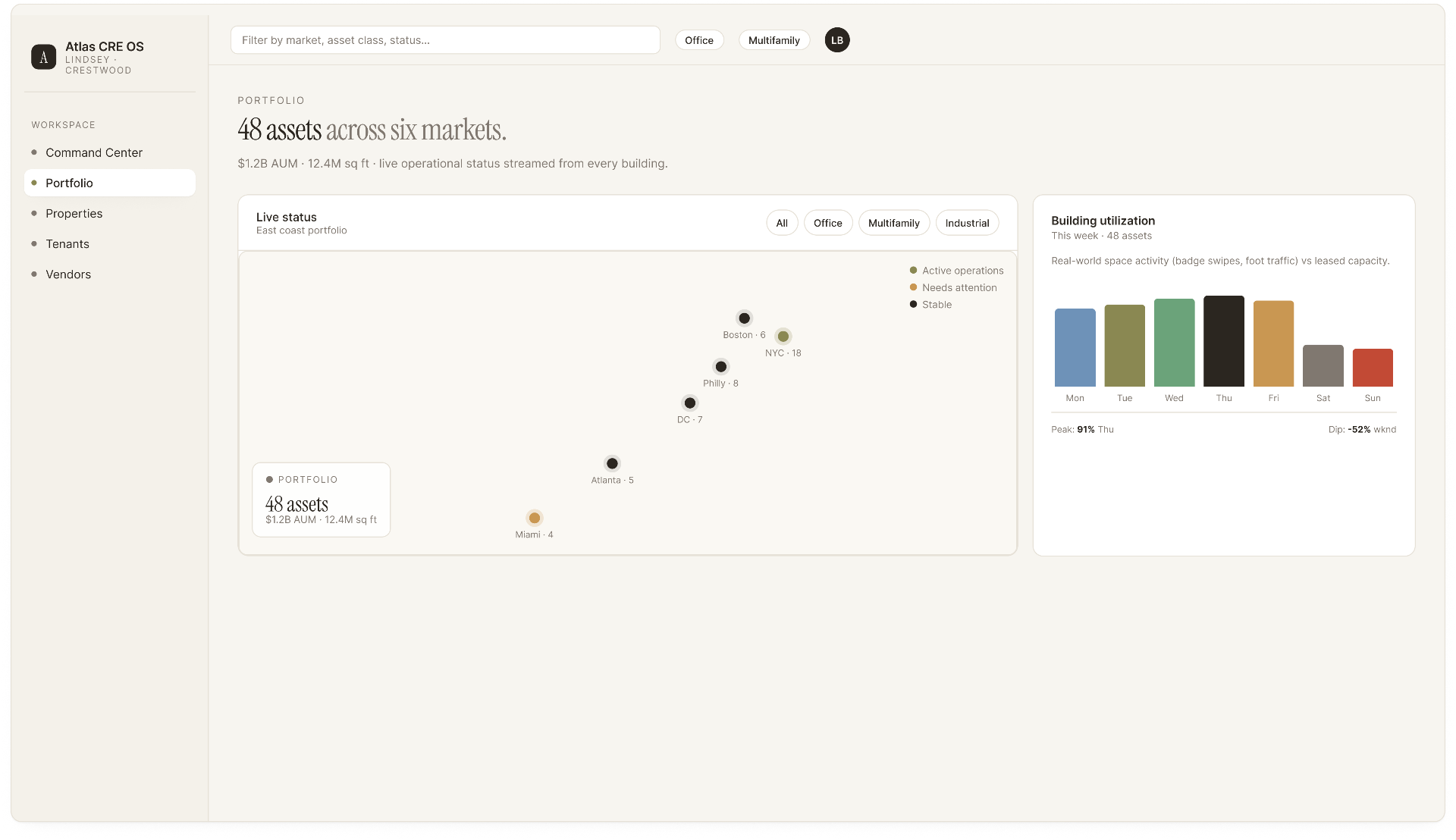
Scales from one building to a $1.2B portfolio without rebuilding workflows.
05, Reflection
What I learned from this project.
Systems Thinking
Real estate operations span leases, equipment, vendors, and capital. Designing for the whole system, not isolated screens, that's what made Atlas usable.
Hierarchy Beats Density
Operators don't need more data; they need to know what matters first. Ranking by NOI impact turned a noisy feed into a clear decision queue.
AI Should Assist, Not Distract
The best AI moments pointed to one specific action, a drifting chiller or an expiring lease, instead of summarizing dashboards no one had time to read.
Iterate With Operators, Not For Them
Early prototypes tested with those in the industry reshaped the flows faster than any internal review could.
Next case
Enterprise SaaS · 2025