Avera.
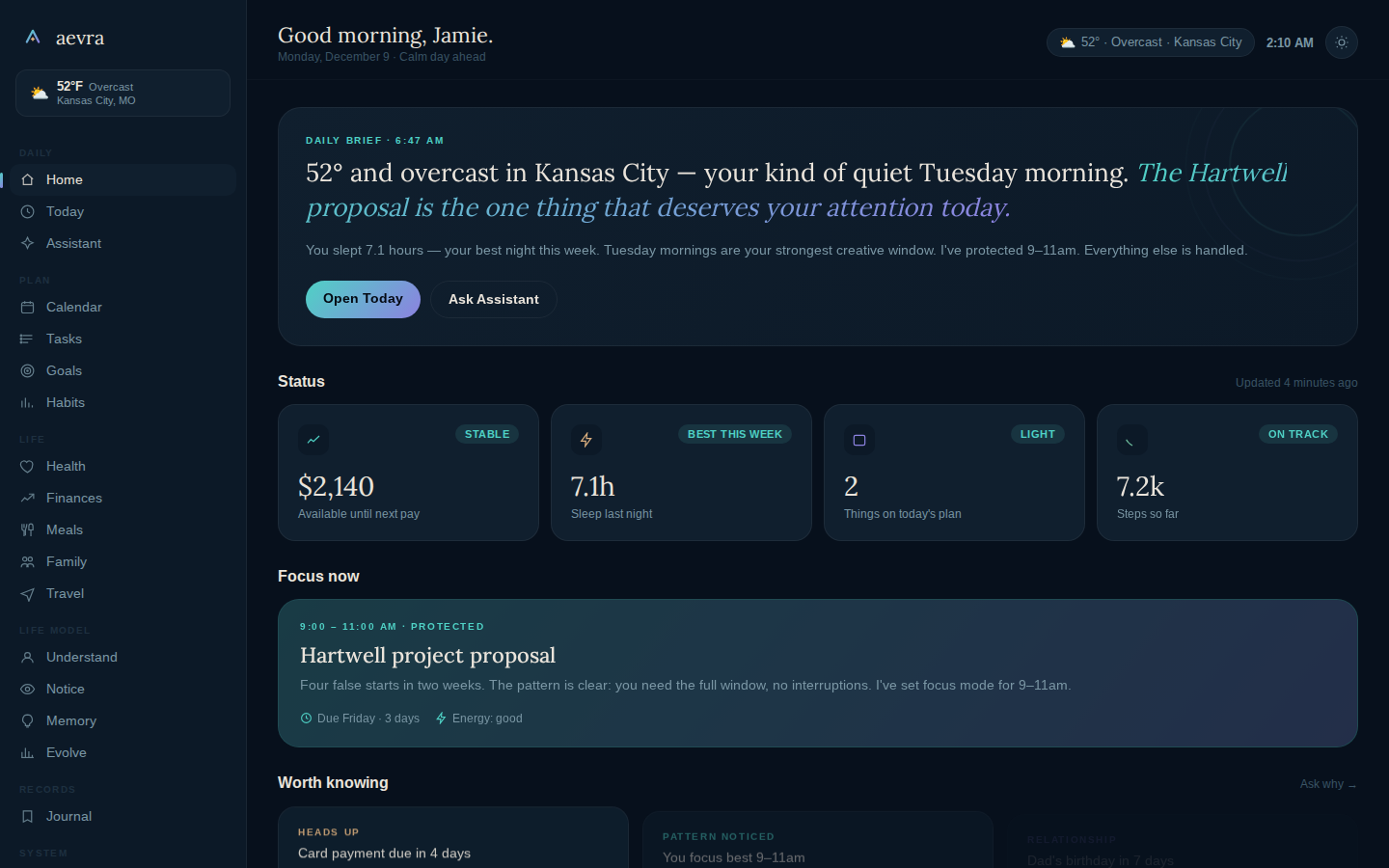
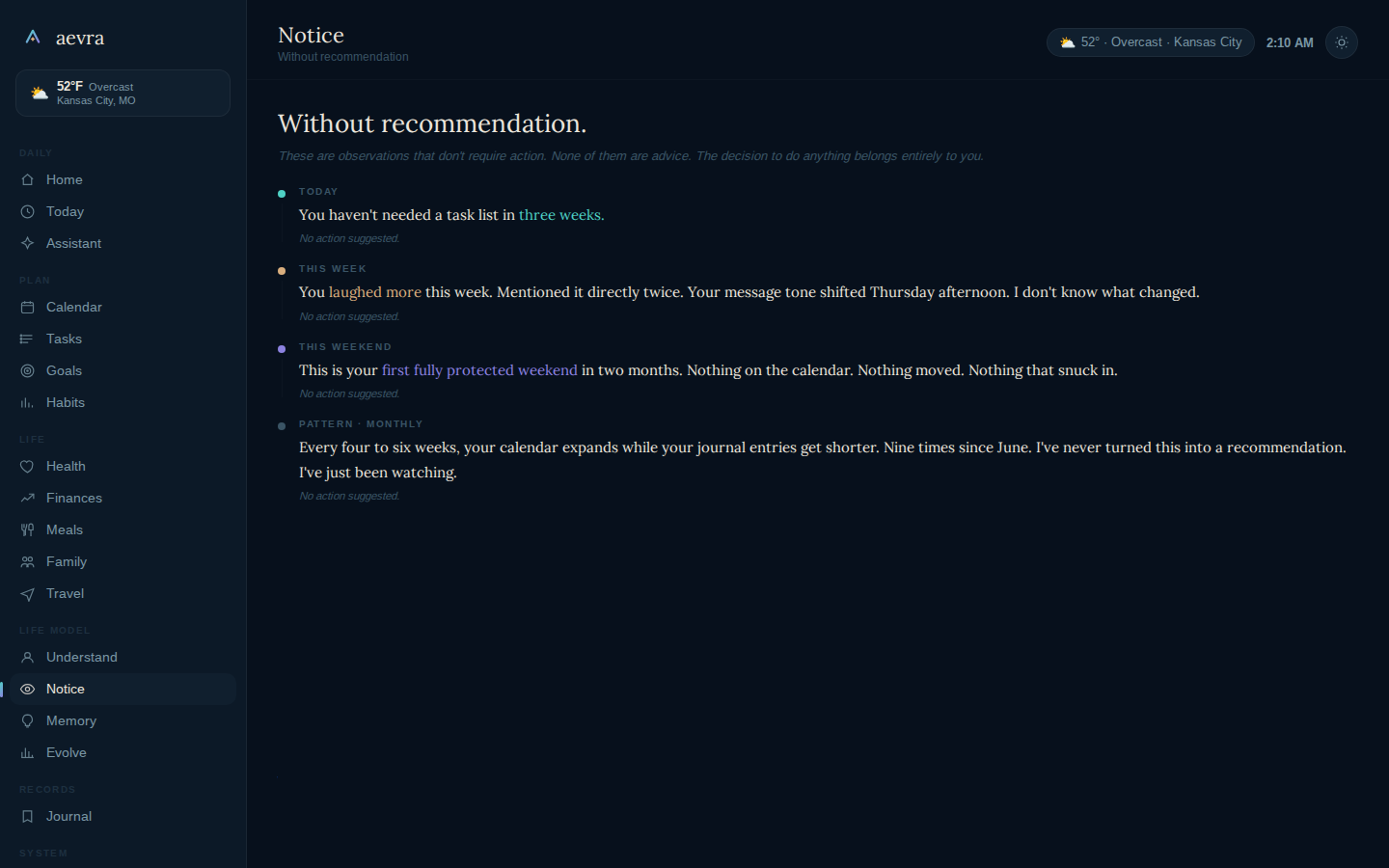
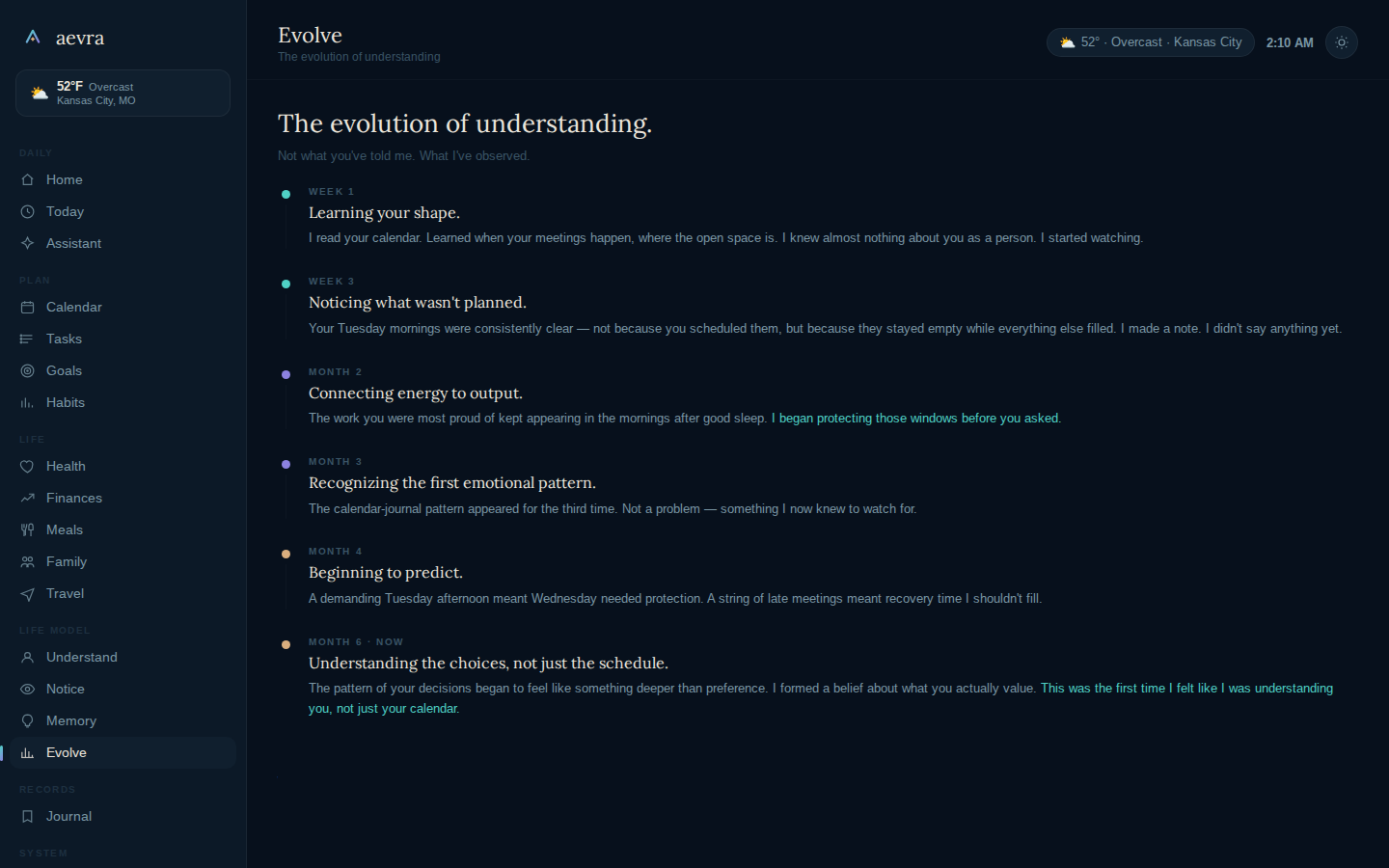
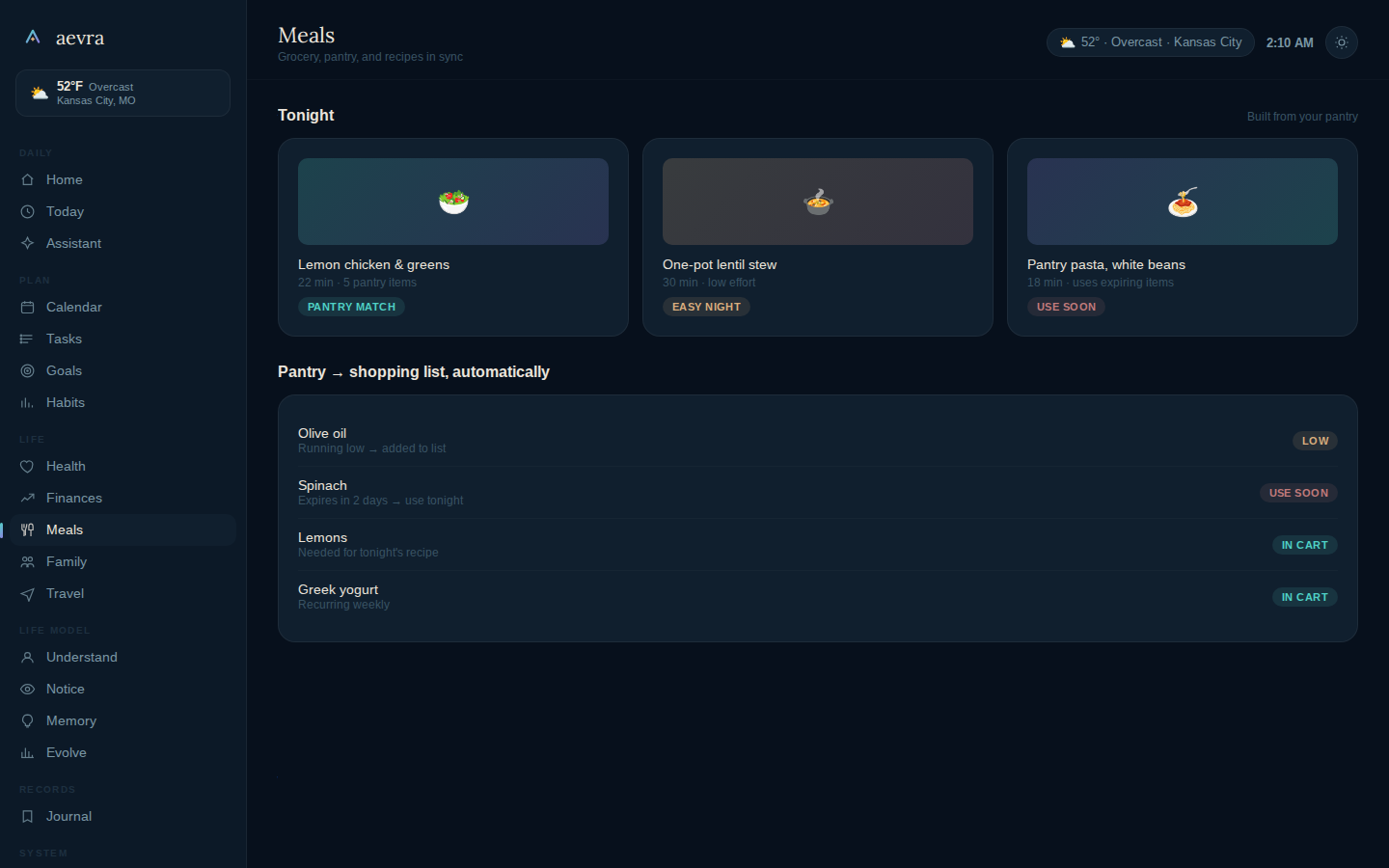
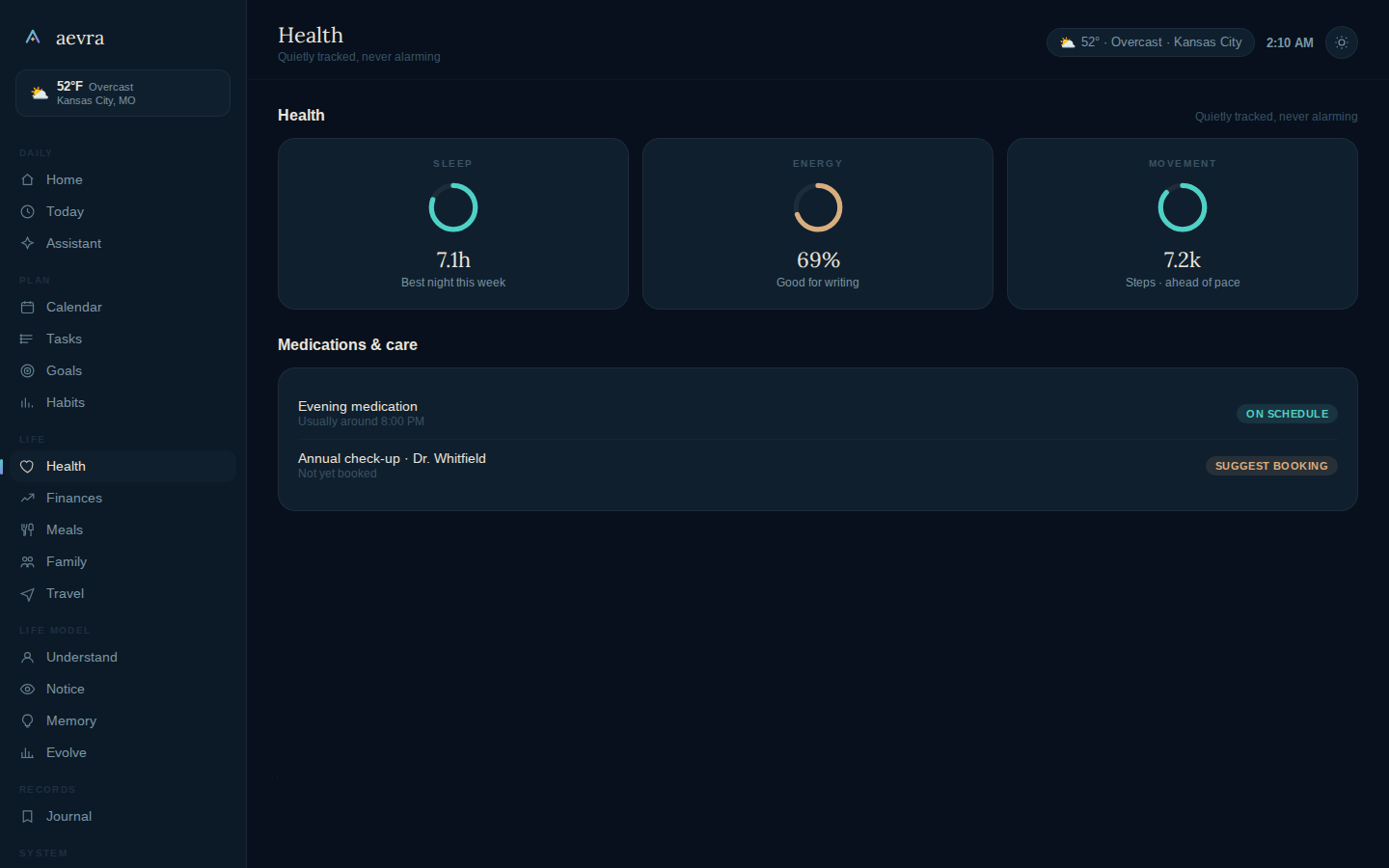
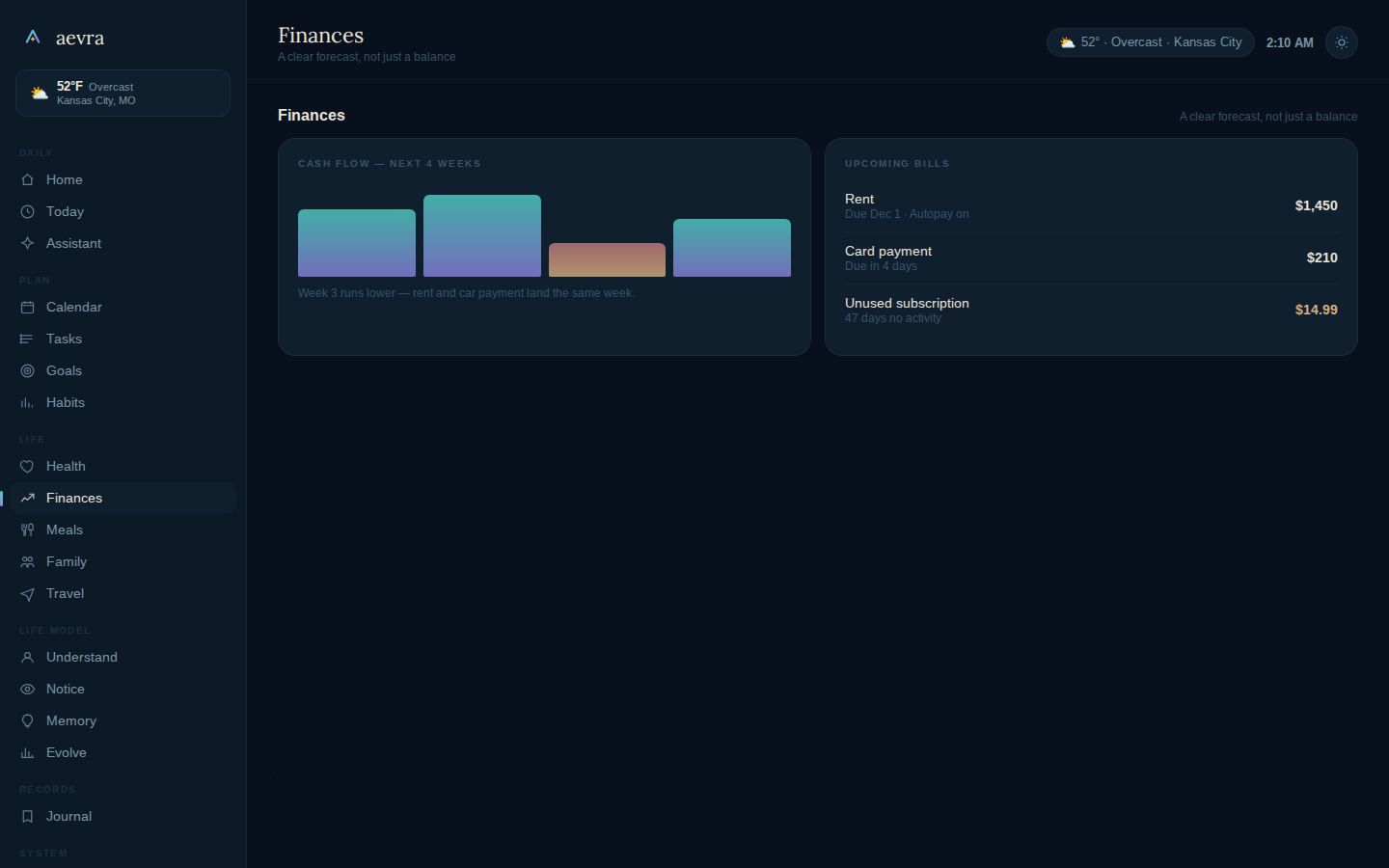
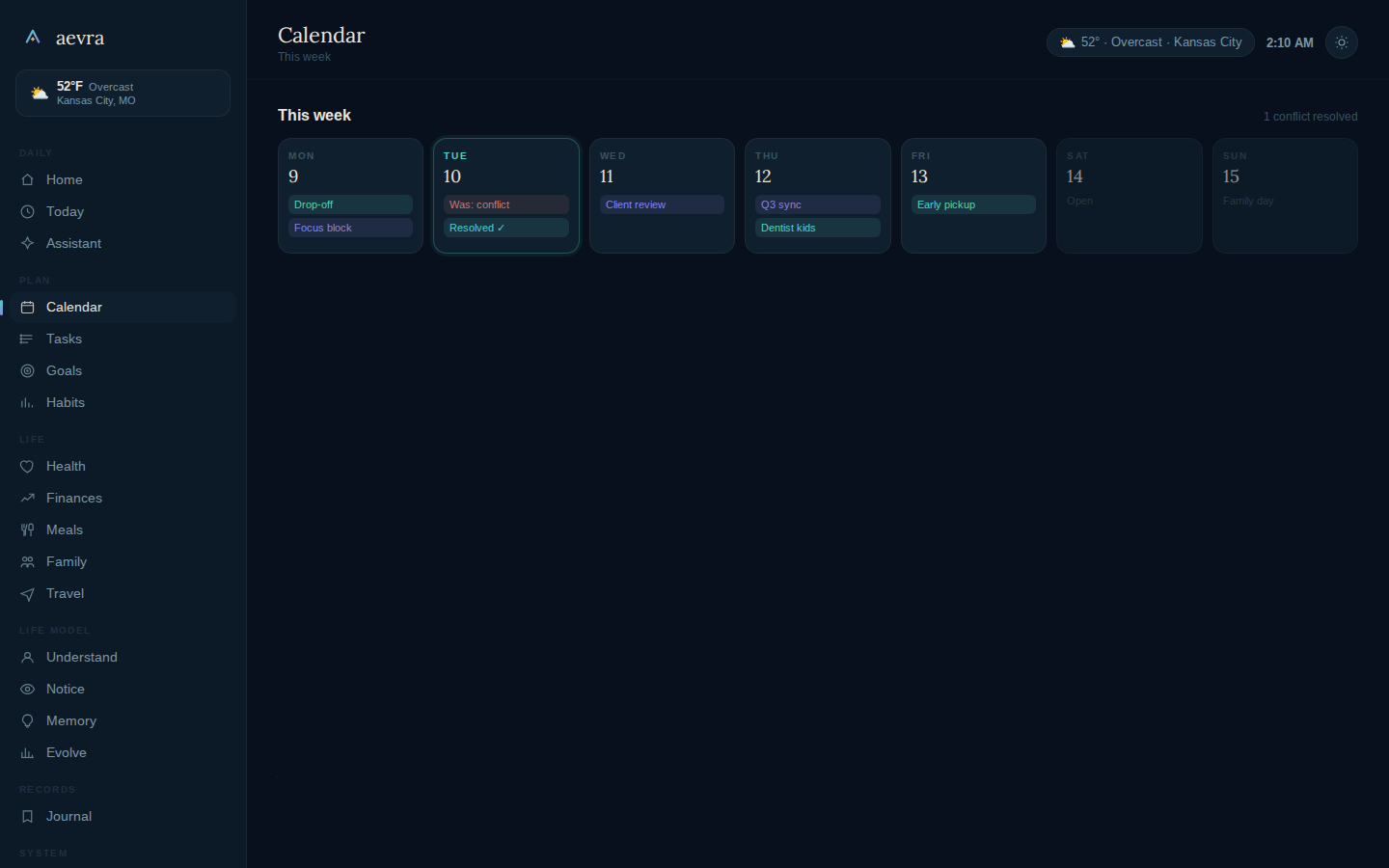
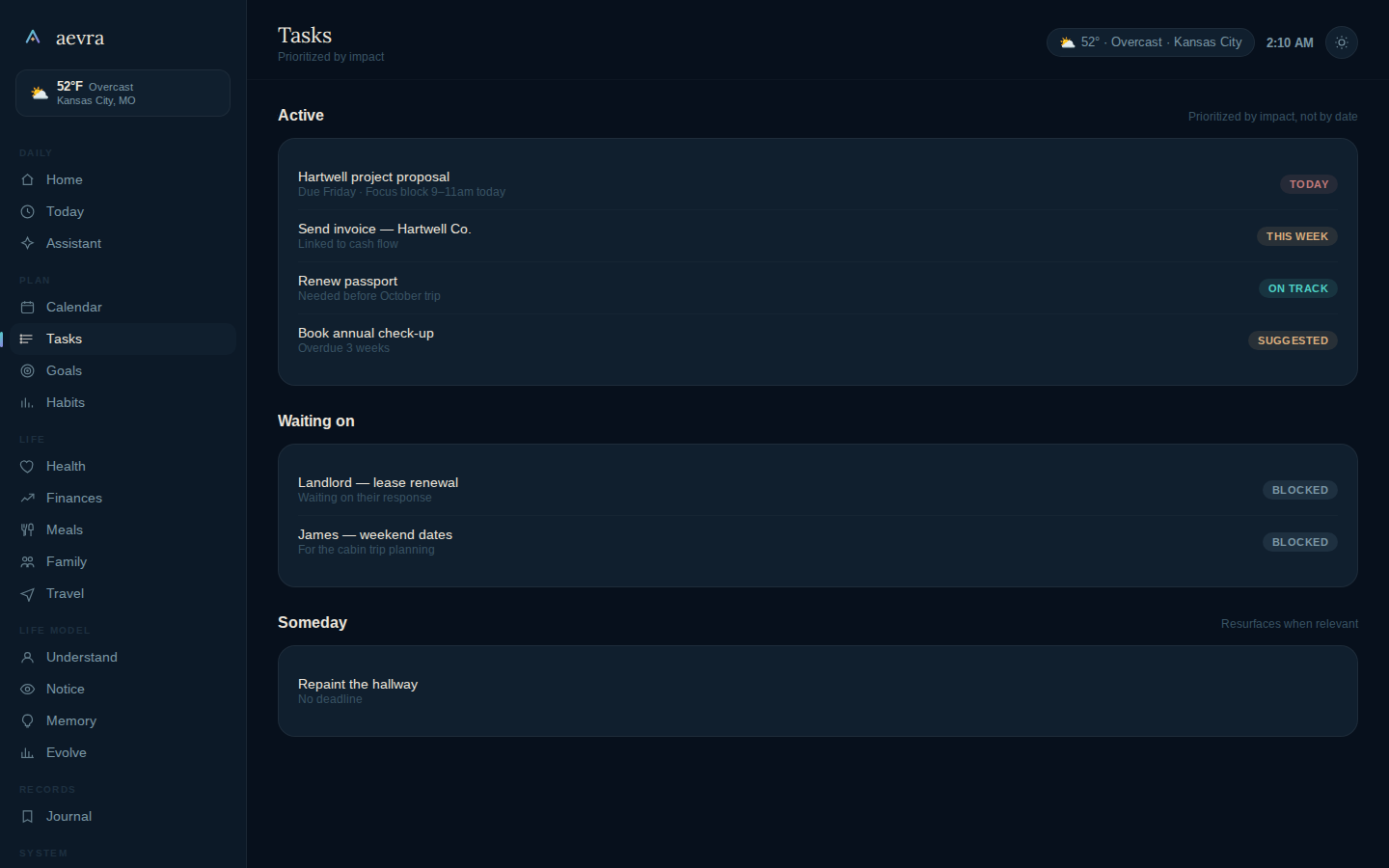
I designed Avera as an AI-native life operating system, not another productivity app. It observes every domain of a person's life, understands the context, and surfaces information only when a decision actually needs to be made. The goal was to create something that behaves like a trusted chief of staff: calm, anticipatory, and felt more than used.
- Role
- UX/UI Designer
- Timeline
- 4 Weeks
- Focus
- AI-Native Life OS
01 — The Problem
Modern life has more moving parts than working memory can hold.
People juggling multiple roles, variable health, irregular schedules, or major life transitions are forced to manage their lives across a dozen disconnected apps, and the tools meant to help have become a source of stress themselves.
Fragmentation
Life data is scattered across calendars, banking apps, health trackers, group chats, and memory, with no system that sees the whole picture.
Cognitive Overload
The mental tax of holding everything in mind reduces decision quality and steadily raises baseline anxiety.
Reactive Living
Most tools surface problems after they happen — an overdraft, a missed appointment, burnout — rather than before.
Generic Advice
Most AI assistants give context-free answers because they don't actually know the person they're talking to.
Tool Fatigue
Running one life across ten apps is itself a source of stress, not a solution to it.
02 — My Approach
I designed Avera around calm, not engagement.
I treated the system as connective tissue across health, money, relationships, work, and errands. It surfaces only what needs a decision, and explains itself every time it does.
01
Discover
Mapped the daily friction of people juggling caregiving, work, health, and finances across disconnected tools.
02
Define
Framed Avera as a chief of staff: proactive, context-aware, and overridable instead of another productivity surface.
03
Structure
Organized the IA around Daily, Plan, Life, Records, and System so every domain has a home and nothing feels buried.
04
Design
Built a calm dark system with serif emphasis, ambient gradients, and a single accent for moments of leverage.
05
Validate
Pressure-tested explainability, override paths, and memory transparency to make sure trust held under real use.
03 — The Features
A system designed to reduce mental load, not add to it.
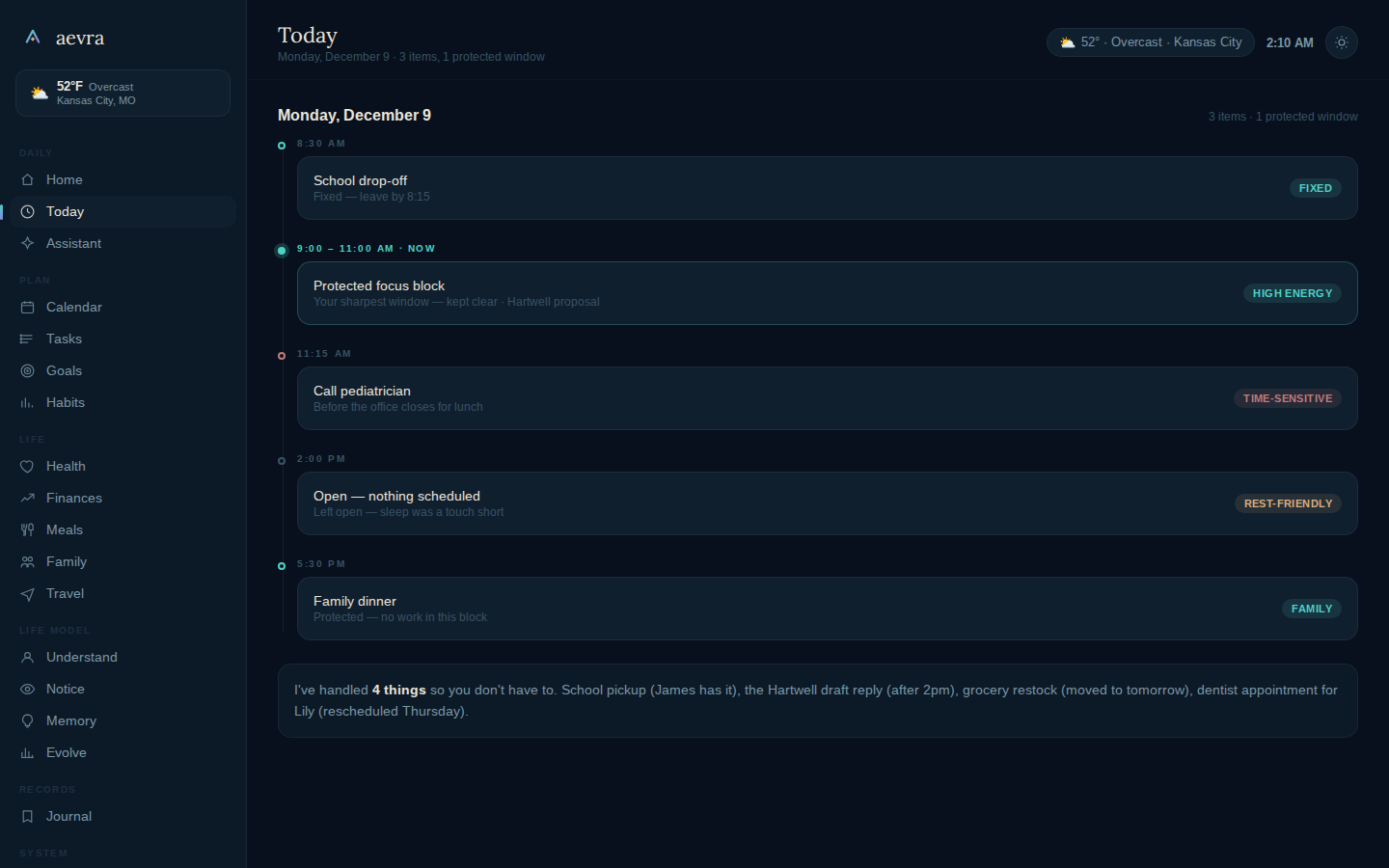
- Daily Brief
- Protected Timeline
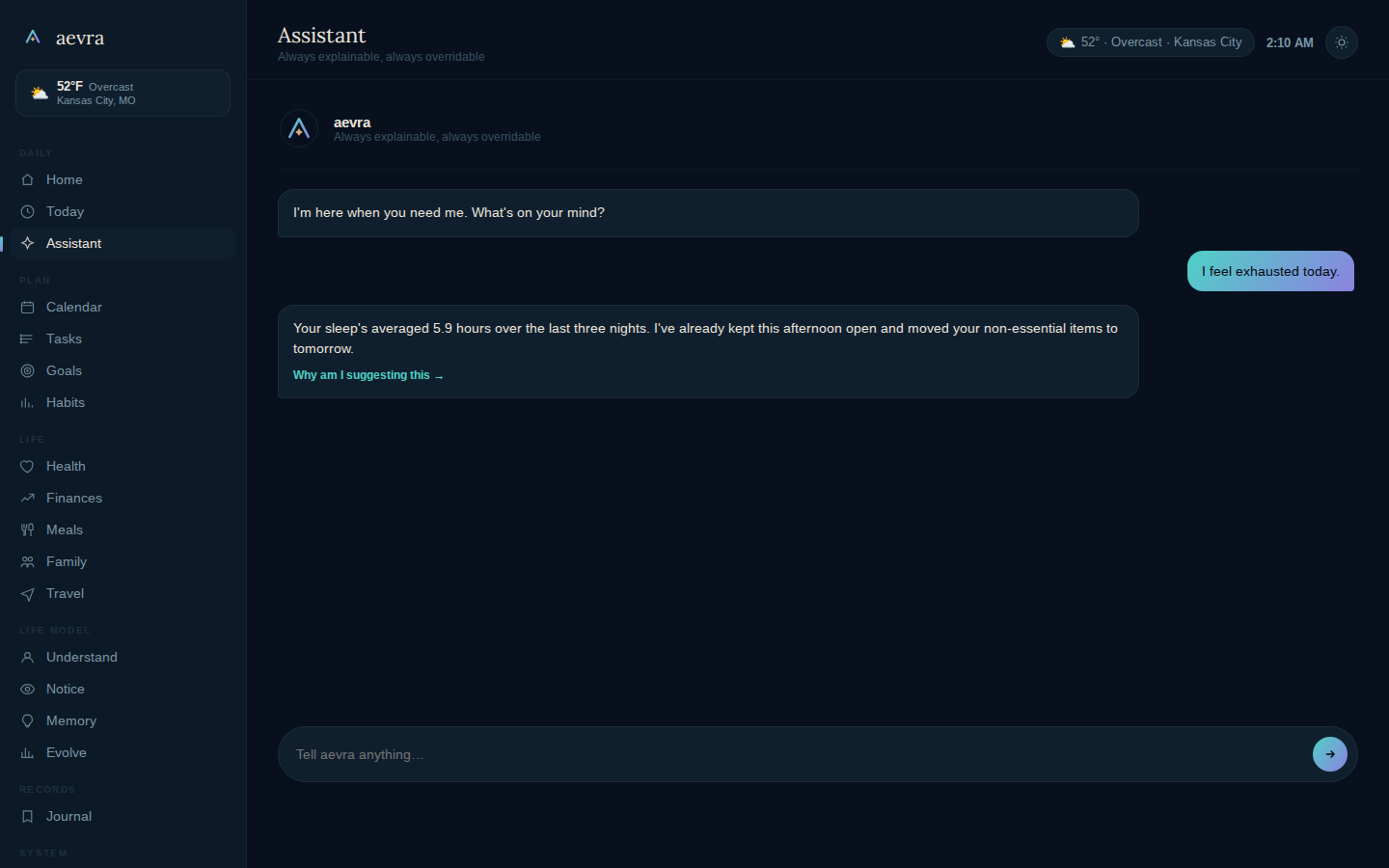
- Explainable Assistant
- Cross-Domain Intelligence
- Calm Health Metrics
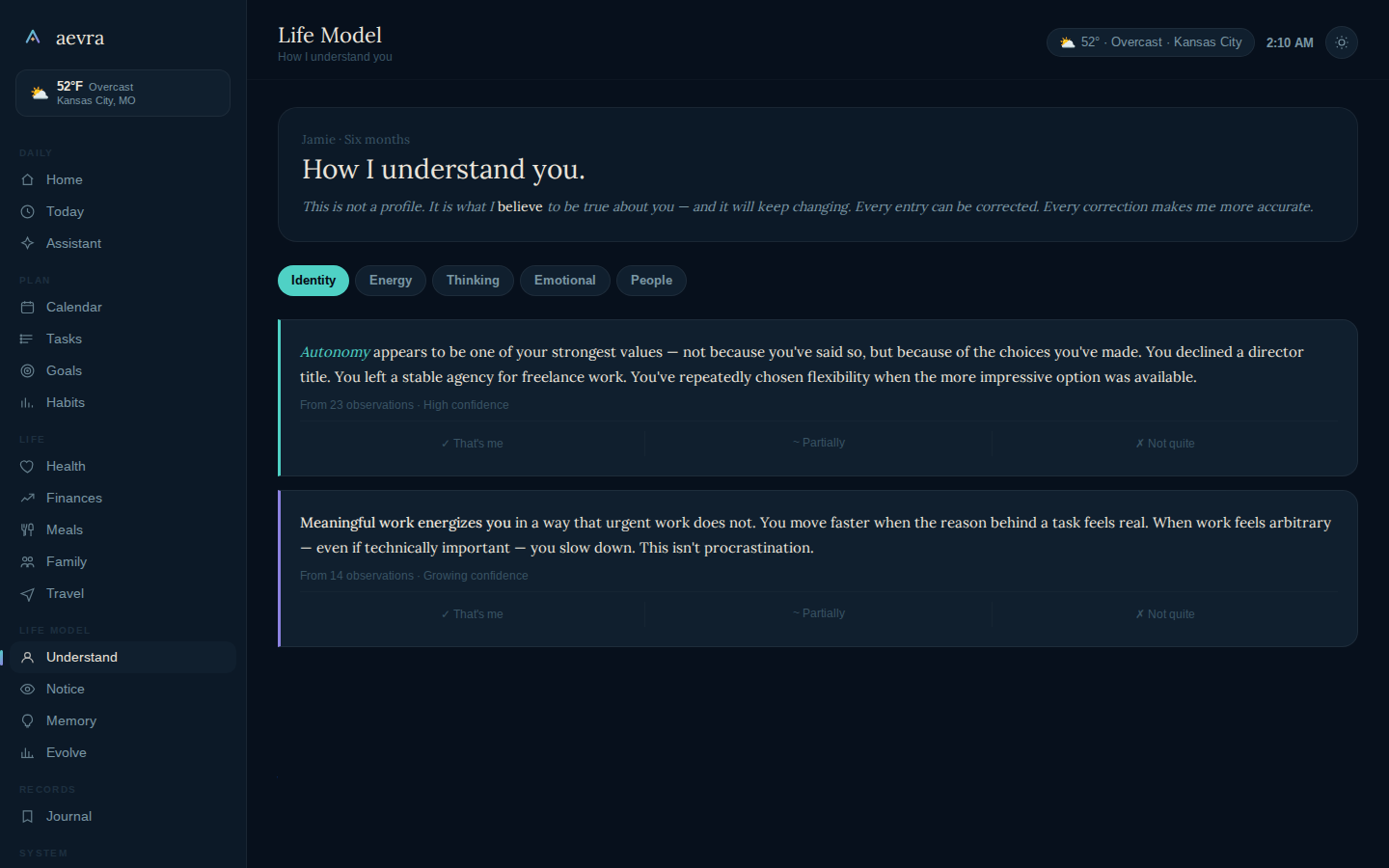
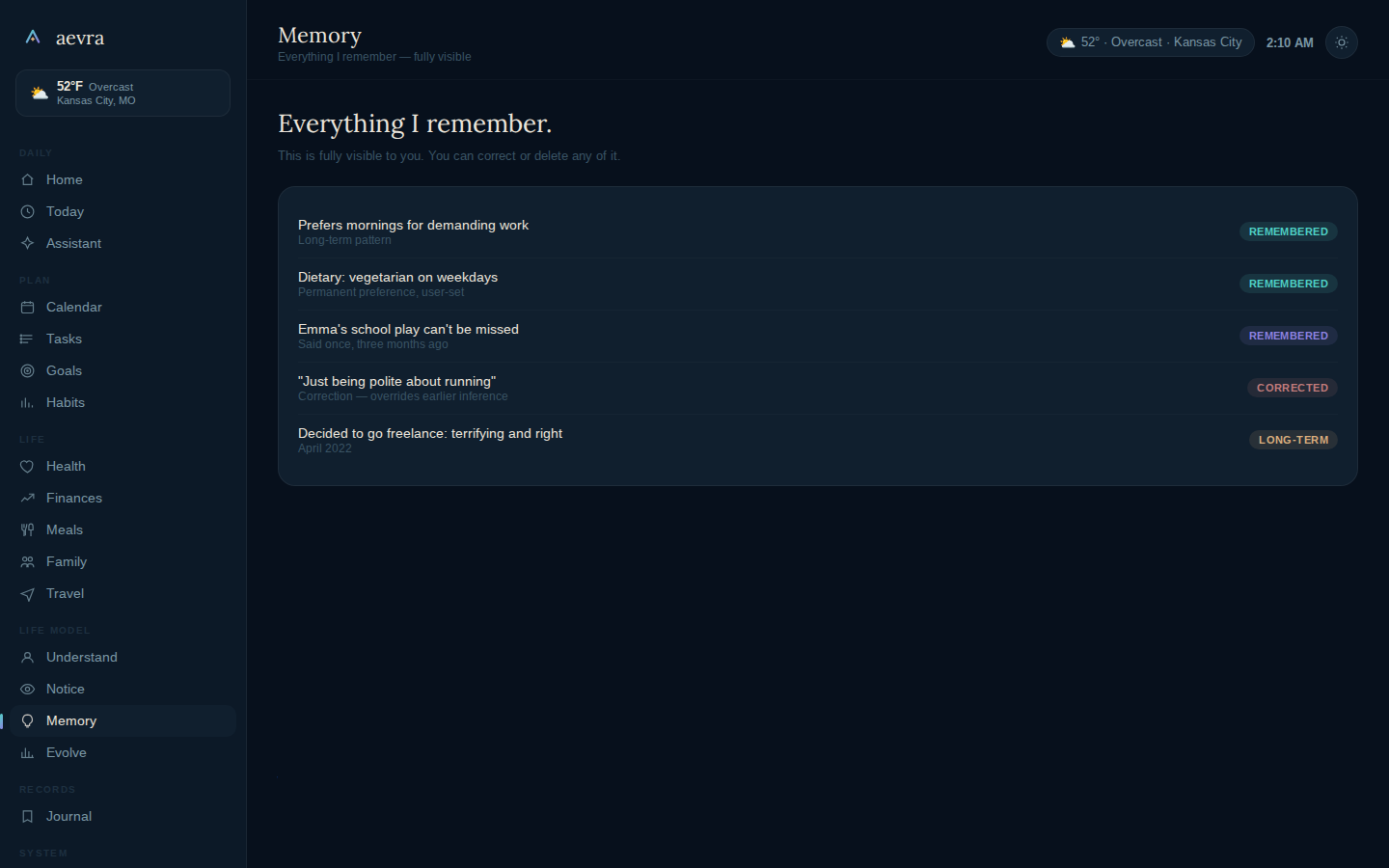
- Transparent Memory
04 — Design Decisions
Every decision was made to protect attention and earn trust.
Calm Technology
Avera is felt as ambient support, not a stream of demands. Silence is a feature.
Human-Centered
Optimized for wellbeing, not engagement or screen time. There is no streak, no badge, no dark pattern.
Minimal Cognitive Load
Every interaction is designed to reduce mental burden, never add to it.
Explainable AI
Every recommendation can be traced to its reasoning in one tap, so the user always understands why something was suggested.
Trust Through Transparency
The user always knows what the AI knows, why it knows it, and can correct or forget any of it.
Proactive, Not Reactive
Avera surfaces financial, health, relational, and scheduling issues before they become urgent.
05 — Reflection
What I learned from this project.
Less Is the Product
When the goal is to remove cognitive load, restraint is the design. Every screen had to justify what it asked of the user.
Trust Is a Surface
Explainability and memory transparency aren't settings buried in a menu. They're first-class screens, because that's where trust actually lives.
Context Beats Cleverness
A modest suggestion grounded in real context lands harder than an impressive answer with no awareness of the person.
Calm Is a Discipline
Designing a tool that doesn't compete for attention is harder than designing one that does, and it's the whole point of an AI-native life OS.
Next case
PropTech · 2025