Yuora.
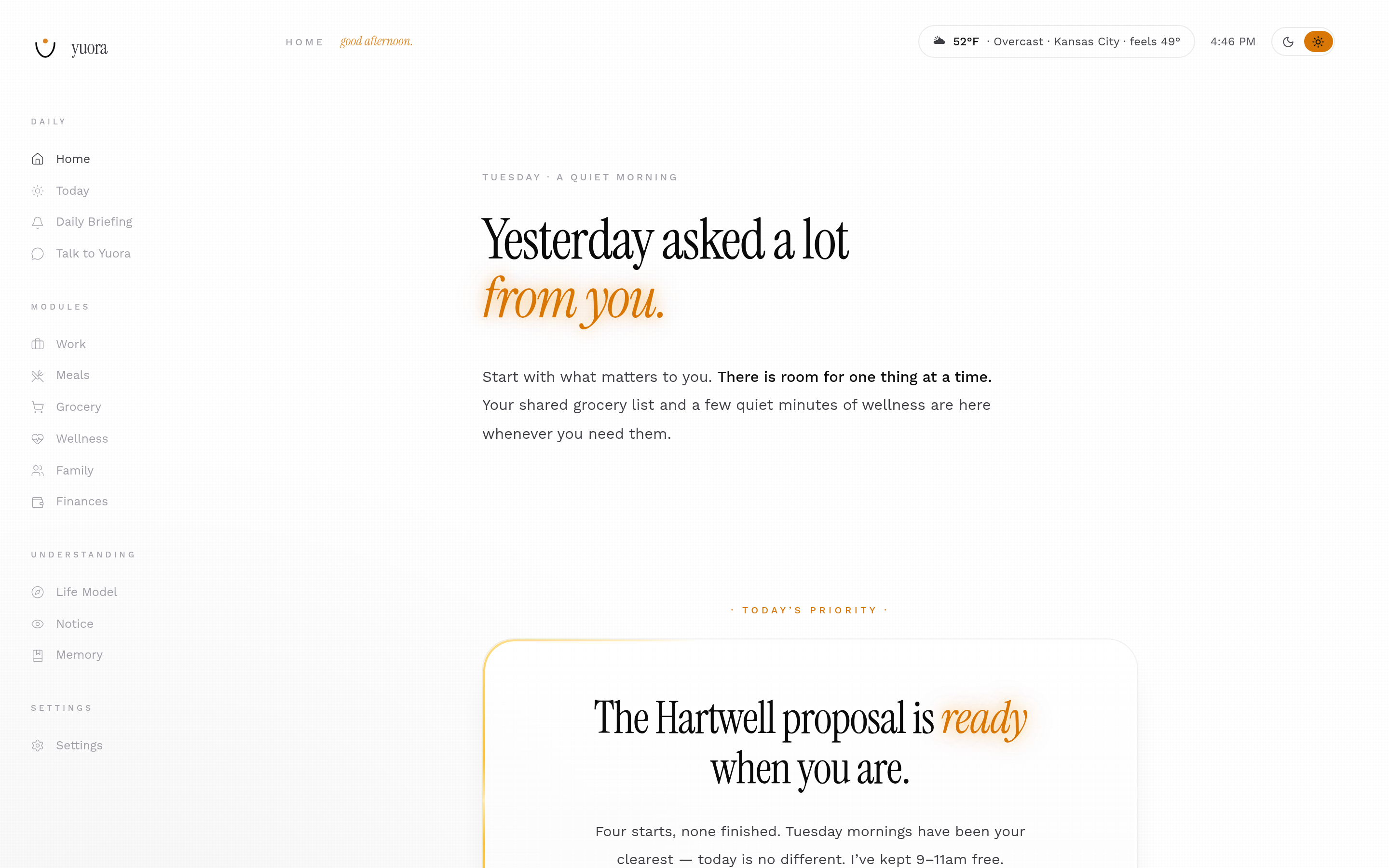
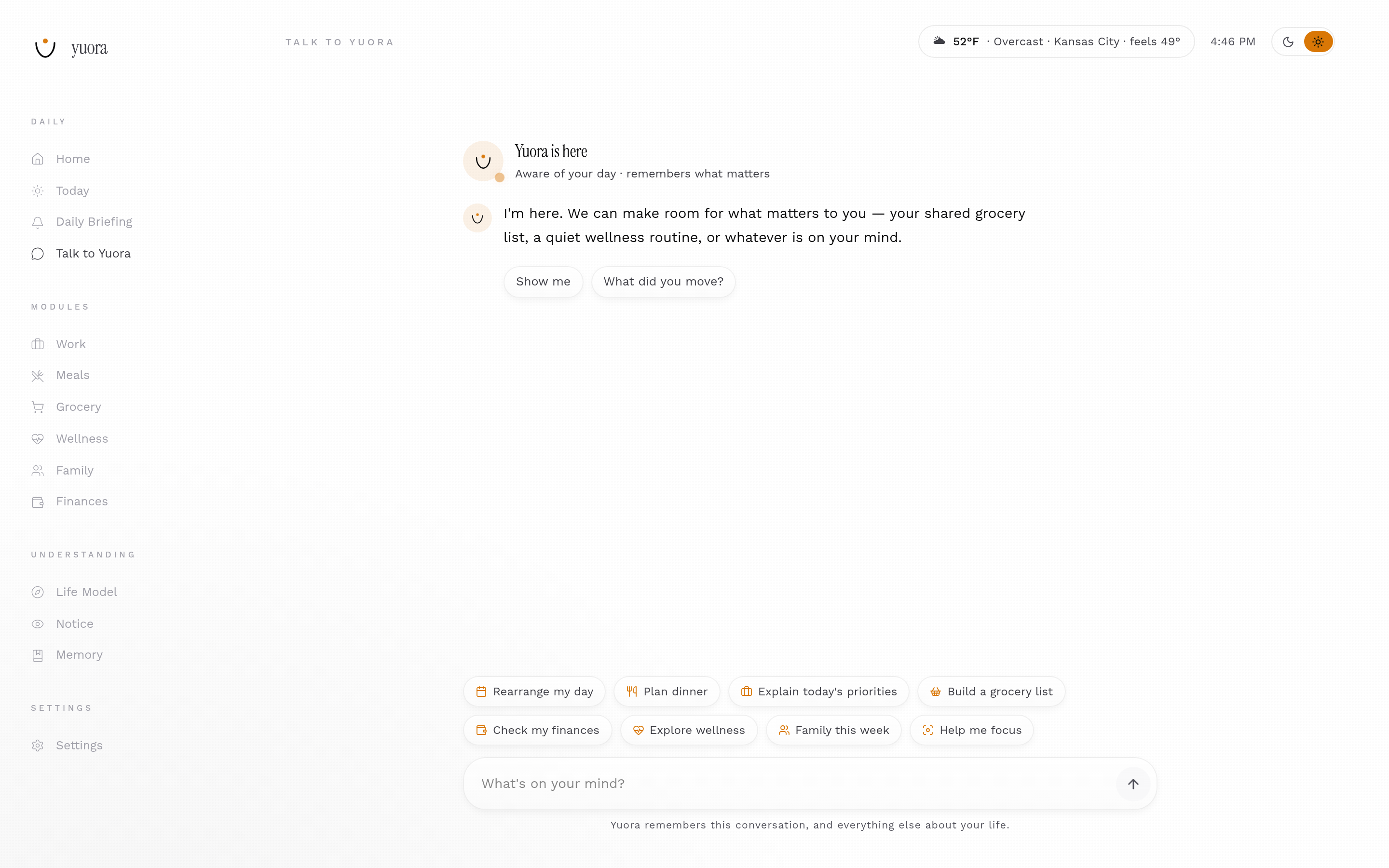
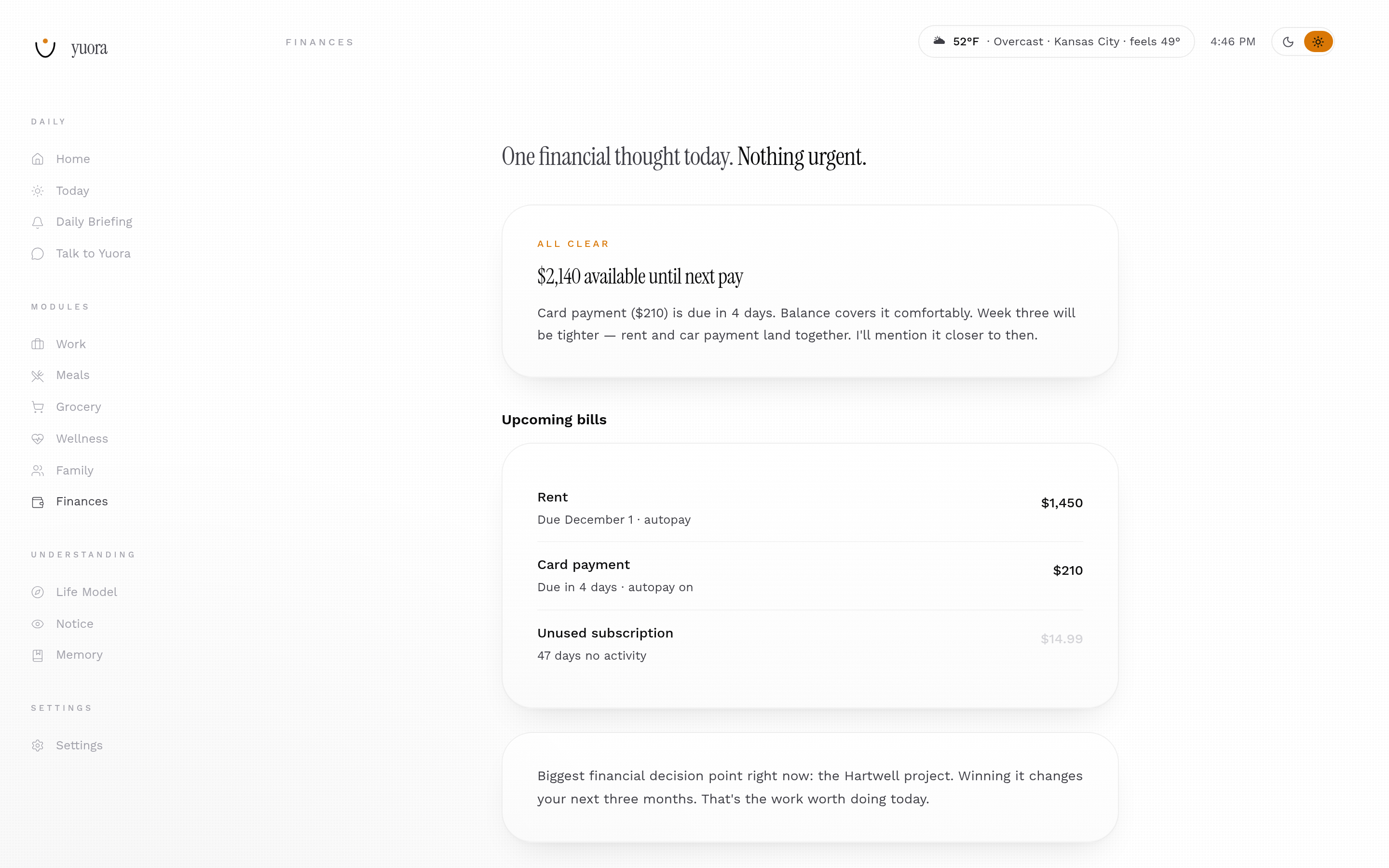
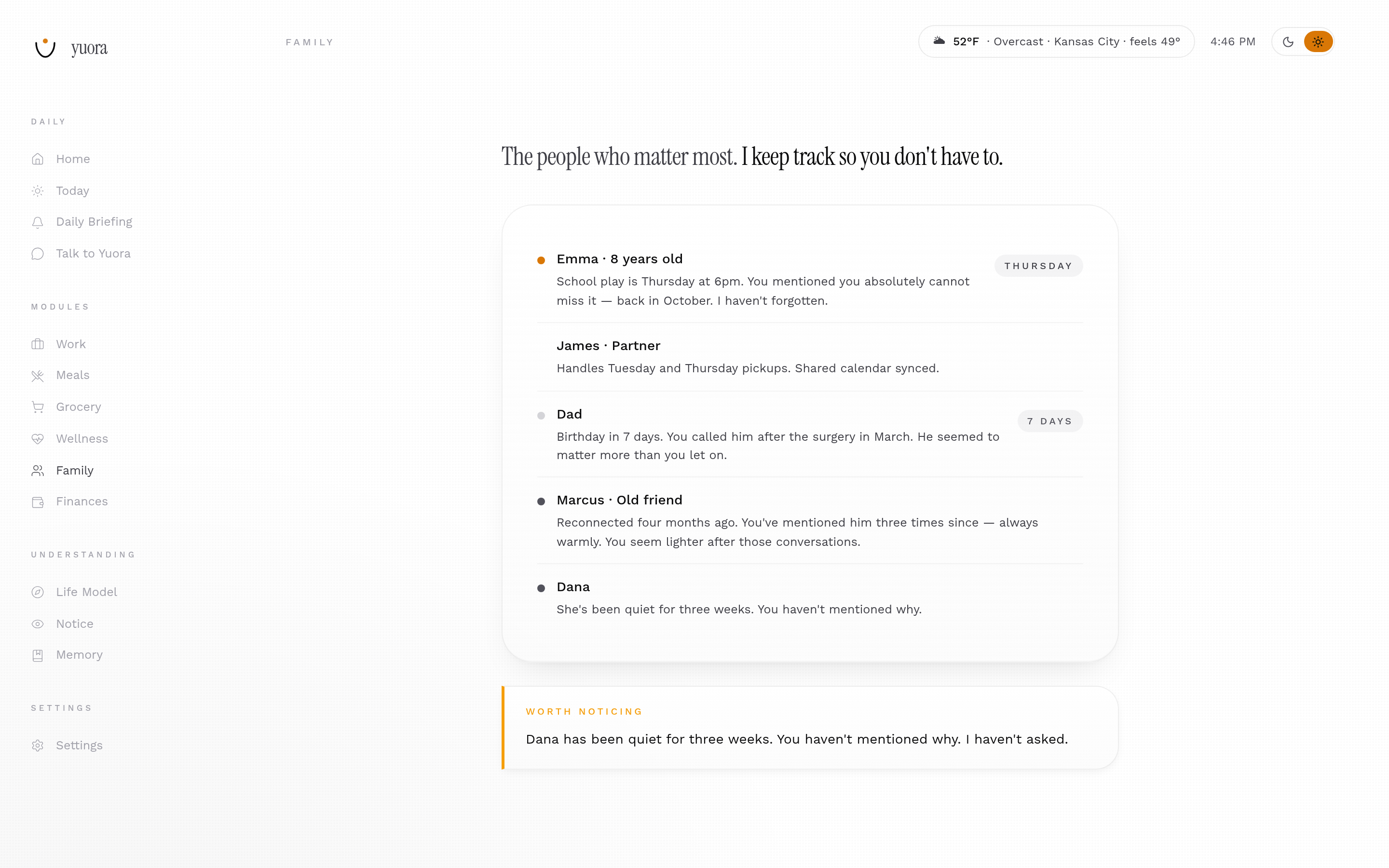
I designed Yuora as an AI life operating system, not another productivity app. It keeps work, meals, groceries, wellness, family, and money in one view of the day, then hands back the one thing worth your attention. The name is the brief: carry less. What I set out to build behaves like a trusted chief of staff, anticipatory, explainable, and always easy to overrule.
- Role
- Product Designer
- Timeline
- 4 Weeks
- Focus
- AI-Native Life OS
01, The Problem
The hard part of running a life isn't the tasks. It's holding all of it in your head.
People juggling a job, caregiving, a household, and their own health are expected to keep the plan in their working memory, across a dozen disconnected apps. The tools sold as relief have quietly become part of the load.
Fragmentation
Work, meals, money, family, and health each live in their own app, and none of them know what the others just did.
Mental Holding Cost
Tracking, remembering, and quietly rescheduling is the real expense of a week, and it never appears on a to-do list.
Reactive by Design
Most tools surface an overdue bill, a forgotten birthday, or a blown budget only after the moment has passed.
Context-Free AI
An assistant that doesn't know your day hands you an answer you still have to translate into a plan.
Monitoring Creep
Life tools keep asking for wearables, permissions, and history. Help starts to feel like being tracked.
02, My Approach
I designed Yuora around one question: what can this person stop carrying today?
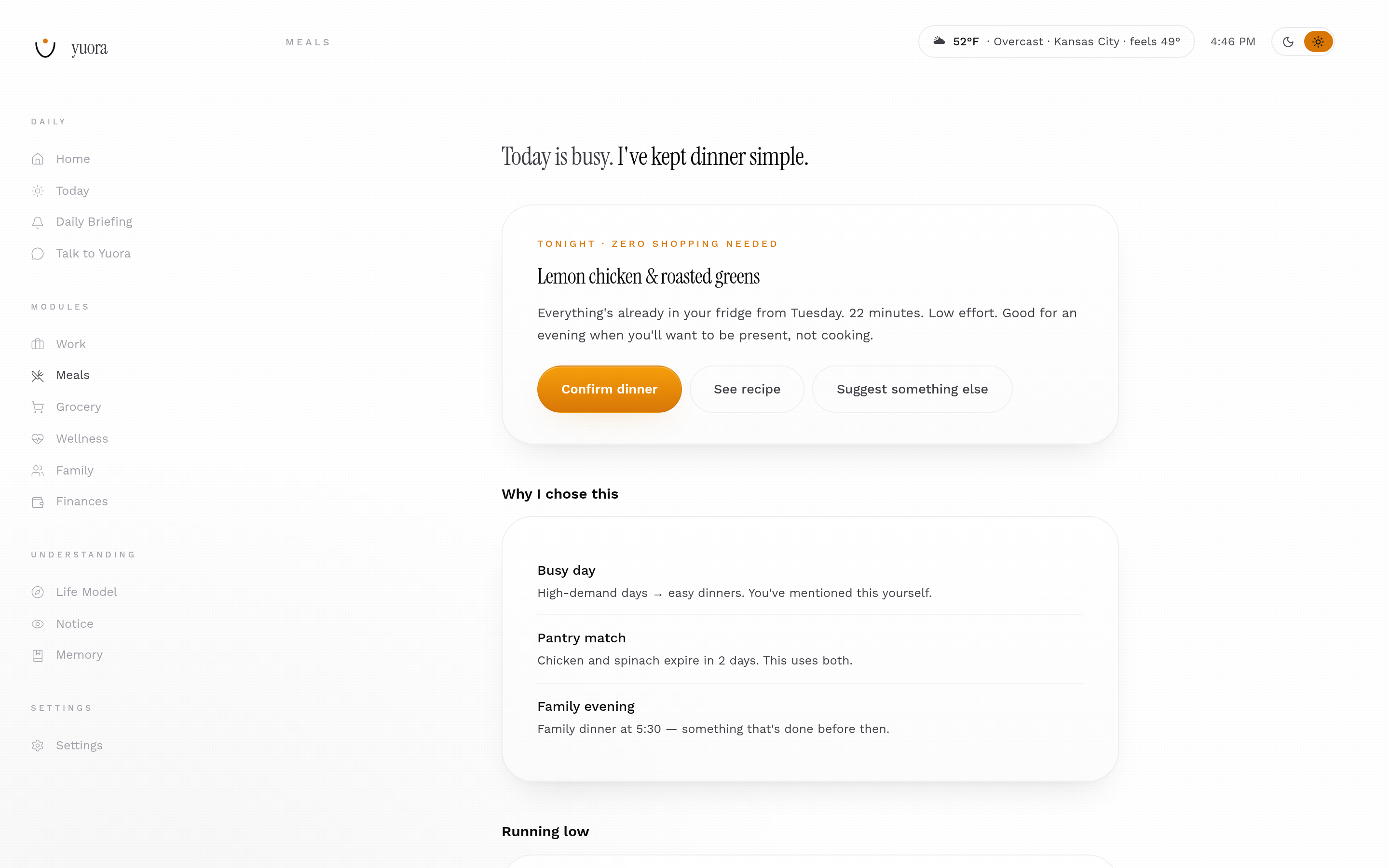
I treated Yuora as connective tissue across work, meals, groceries, wellness, family, and money. It reads the whole day, decides what genuinely needs a decision, and shows its reasoning when it acts. Everything else stays quiet.
01
Discover
Mapped where the mental load actually sits for people running a job, a household, and their own health at the same time.
02
Define
Set the brief as 'carry less': Yuora holds the plan, surfaces one priority, and can be overruled at any point.
03
Structure
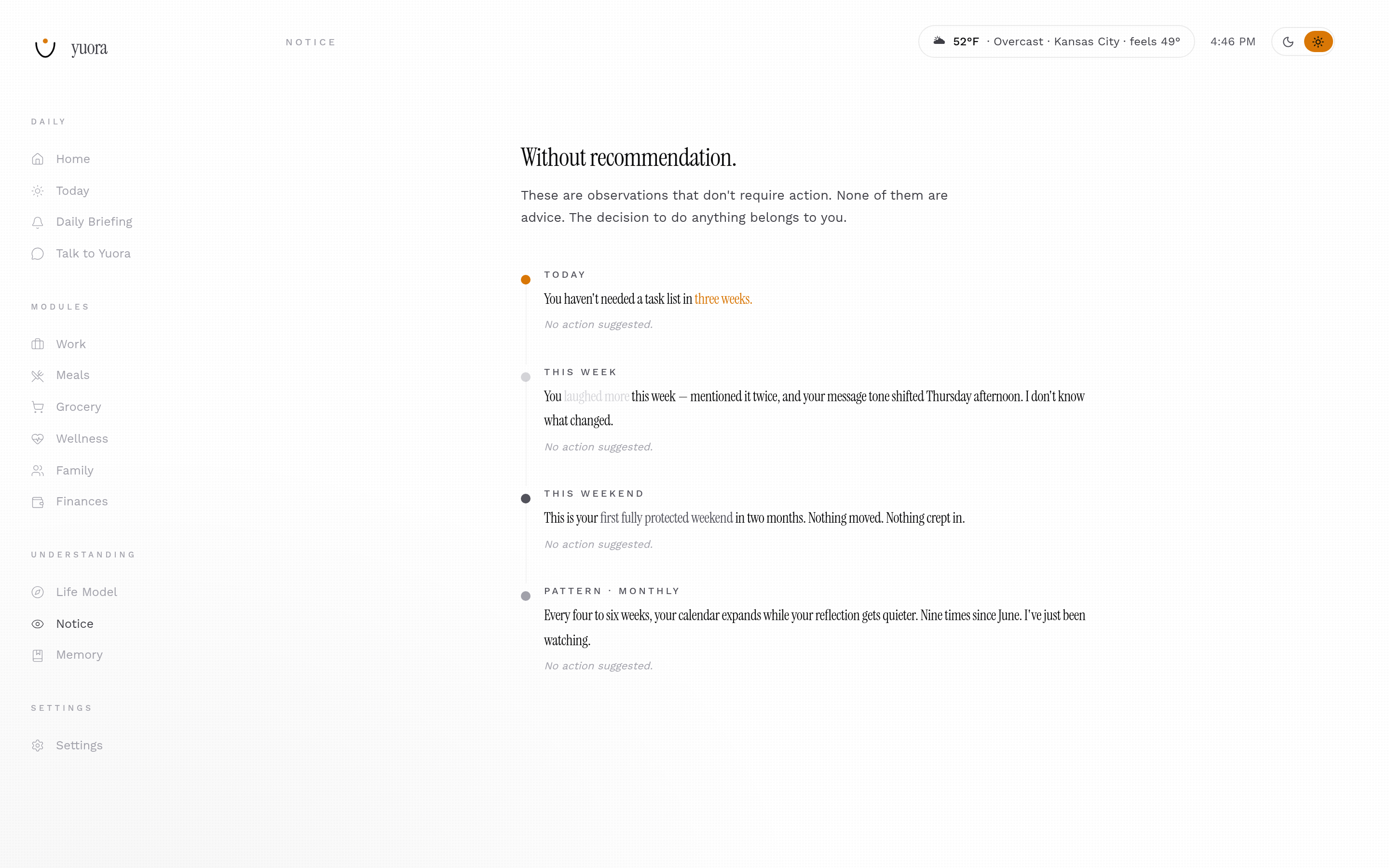
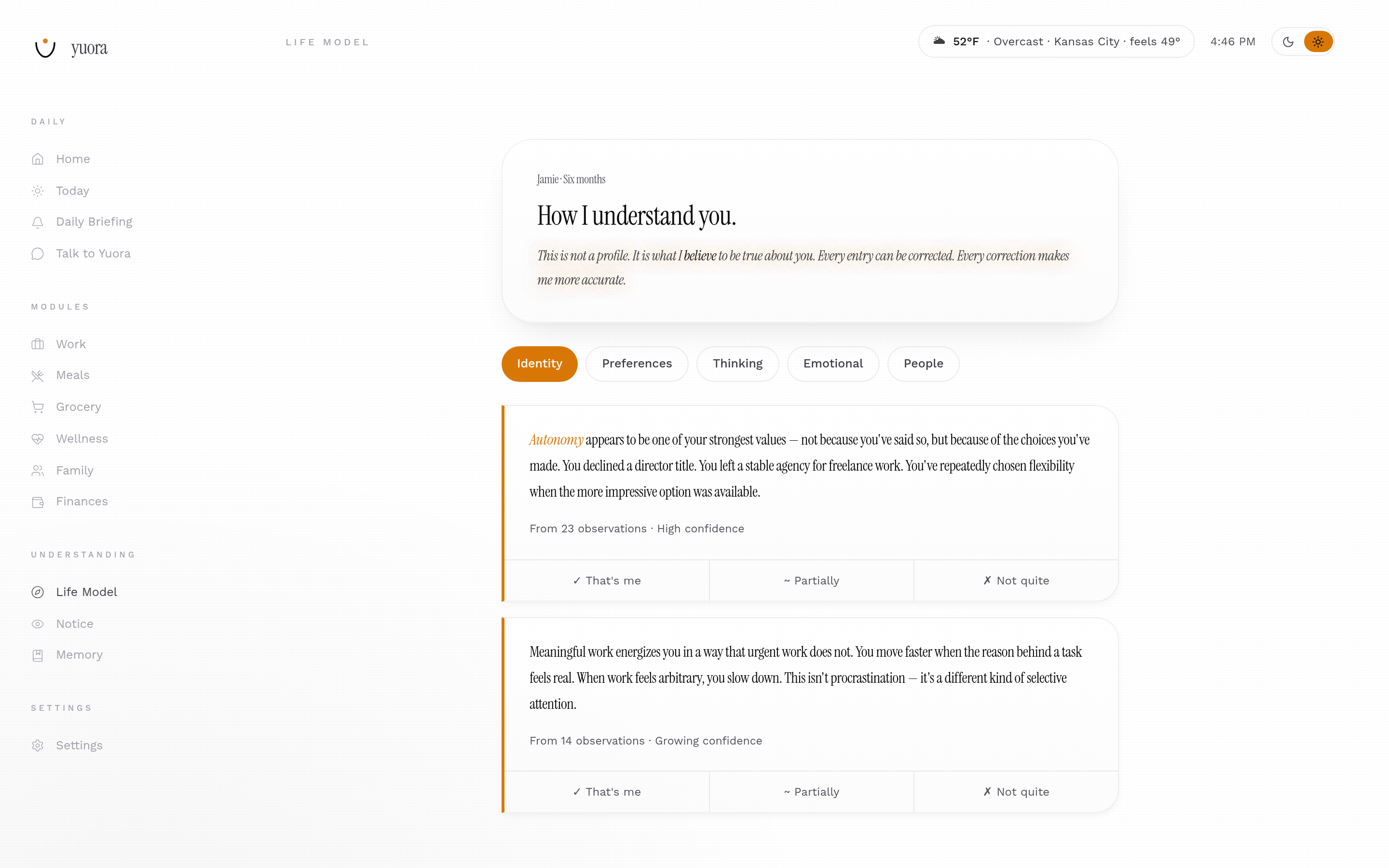
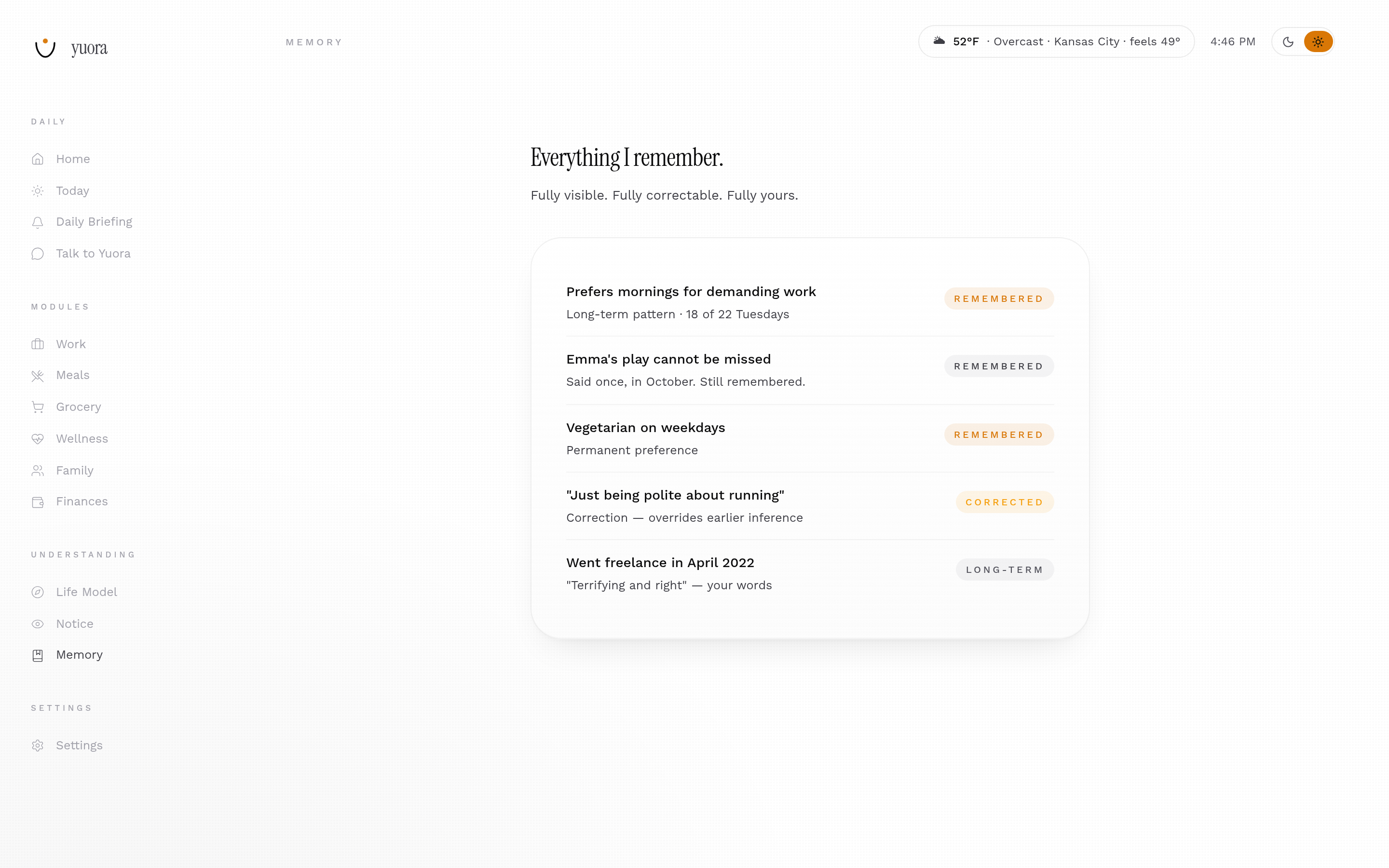
Split the product into Daily (Home, Today, Briefing, Talk to Yuora), Modules (Work, Meals, Grocery, Wellness, Family, Finances), and Understanding (Life Model, Notice, Memory) so nothing is buried in a settings page.
04
Design
Built a warm editorial light system, serif emphasis, generous whitespace, and a single amber accent reserved for whatever matters today.
05
Validate
Went straight at the trust questions: can you see what Yuora remembers, correct it, and find out why something moved?
03, The Features
A system built to hand attention back, not ask for more.
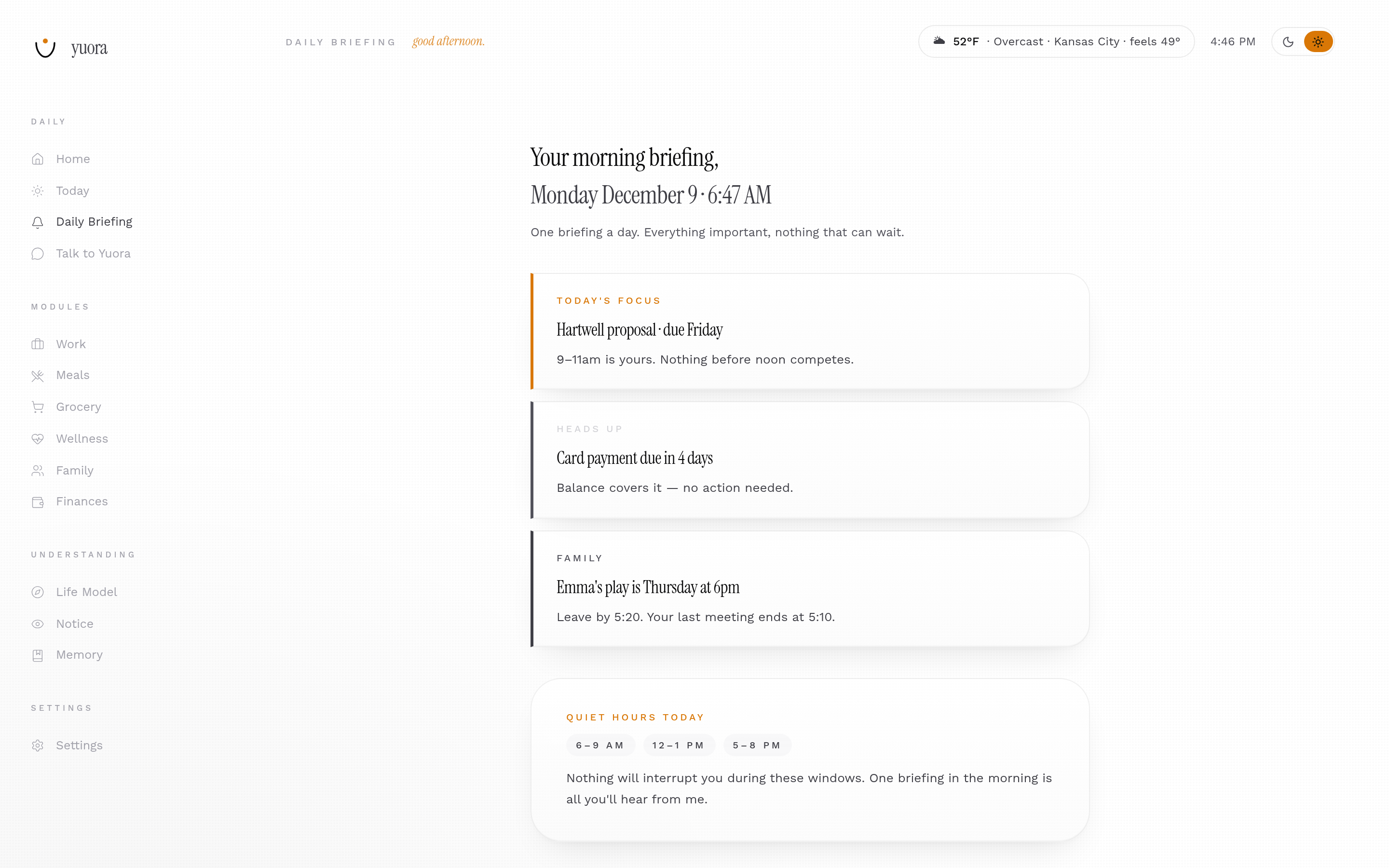
- Daily Briefing
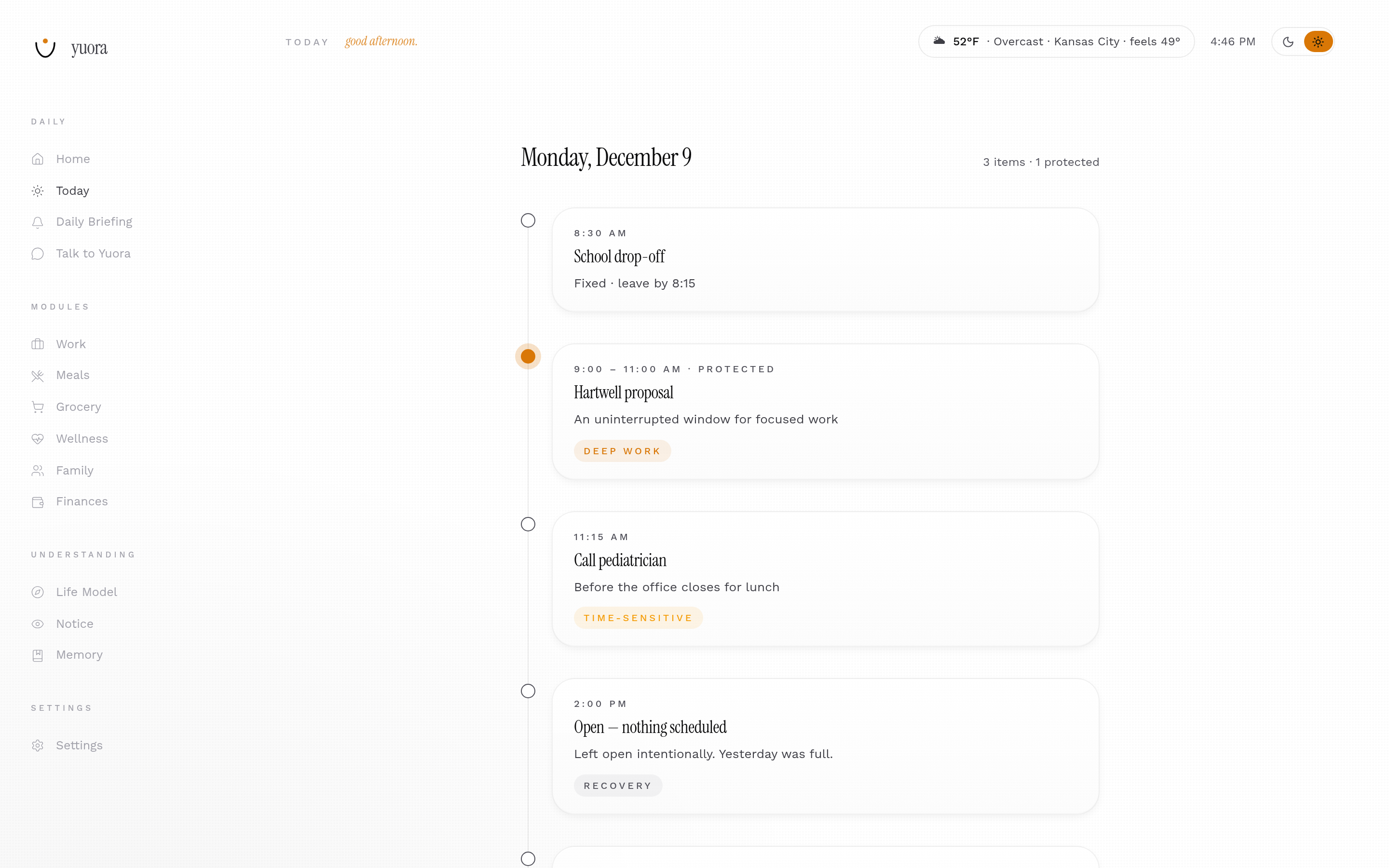
- Protected Timeline
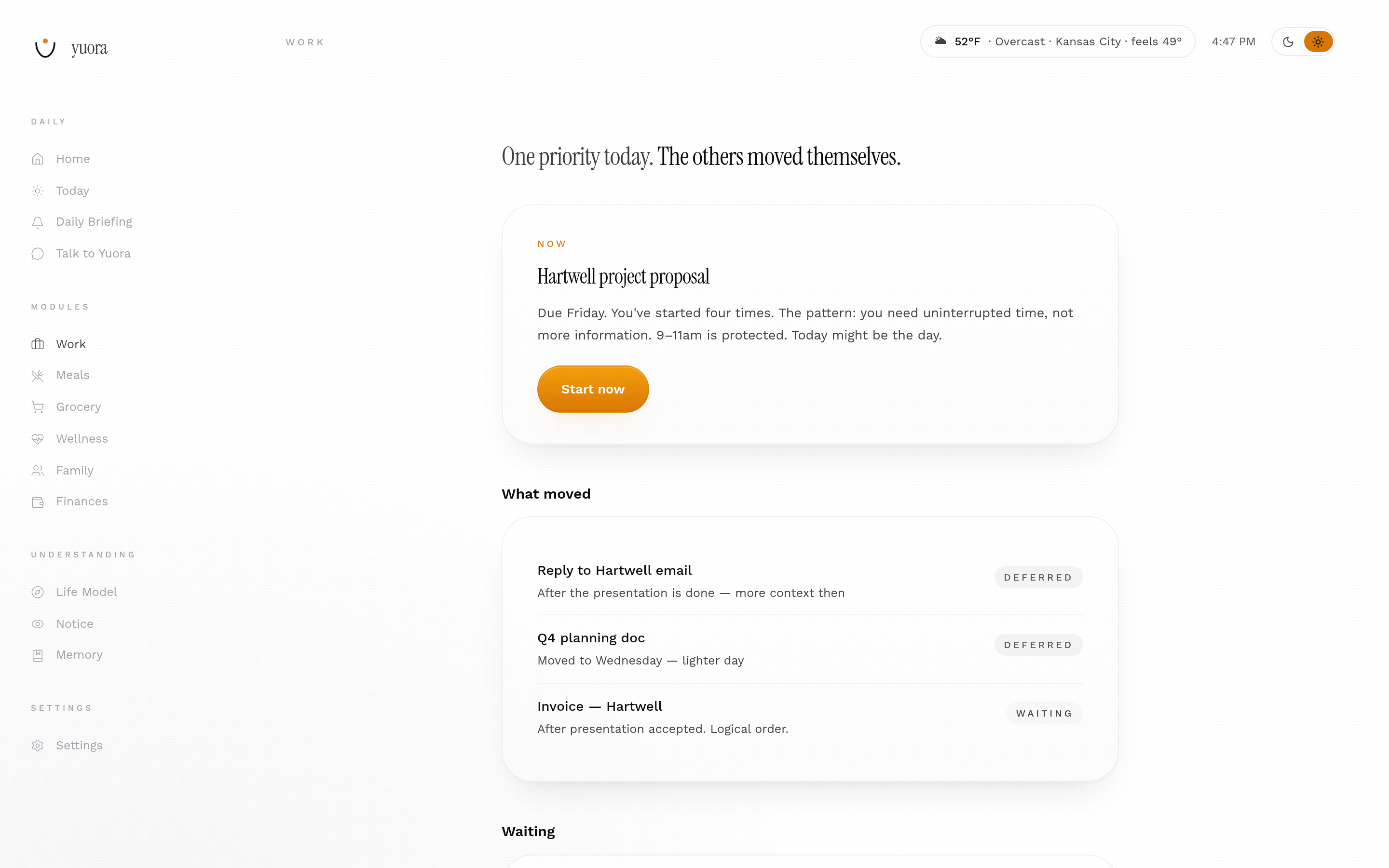
- Self-Rearranging Priorities
- Explainable Assistant
- Life Model
- Visible Memory
04, Design Decisions
Every decision was made to protect attention and earn trust.
One Thing at a Time
If two things are the priority, neither is. The interface commits to a single focus and lets the rest wait its turn.
Move It, Then Say So
Yuora reschedules on your behalf and leaves a visible trail. Automation without a receipt is how trust gets burned.
No Monitoring Required
I removed wearable-dependent statistics and anything that implied tracking. Yuora works from what you tell it, not from data collected about you.
Observation Without a Demand
Notice is allowed to say something useful and ask for nothing. Silence is a feature in both directions.
Memory You Can Edit
What Yuora remembers lives on its own screen, visible, correctable, and yours to delete, because trust can't sit in a black box.
Warm, Not Clinical
An amber accent and editorial serif keep the tone humane. Software that's supposed to calm you shouldn't look like a dashboard.
05, Reflection
What I learned from this project.
Restraint Is the Product
When the goal is to remove mental load, every screen had to justify what it asked of the person using it. Most of the work was deletion.
Trust Lives on the Surface
Explainability and memory transparency aren't settings tucked in a menu. They're first-class screens, because that's where trust is actually won.
Context Beats Cleverness
A modest suggestion grounded in someone's real day lands harder than an impressive answer with no awareness of who it's for.
Calm Is Harder Than Clever
Designing something that doesn't compete for attention is a tougher brief than designing something that does, and it's the entire point of a life operating system.
Next case
PropTech · 2025